Hidden Bodrum: History and CultureFrom Halicarnassus to the Population Exchange and Cretan immigrants, a guide spanning cultural heritage and architecture
Hidden Bodrum guide: Halicarnassus, the Myndos Gate, Newton’s digs, the Population Exchange, Cretan immigrants and traditional stone houses.
For many people, Bodrum seems to begin with the Fisherman of Halicarnassus (Cevat Şakir Kabaağaçlı) or to be limited to a sea-and-sand holiday. Yet the peninsula’s past goes back much further, and different periods, cultures and names have shaped the town.
In this guide on Hidden Bodrum we have brought together the heritage of ancient Halicarnassus, the Myndos Gate and its legend, the traces of the 1856–1857 excavations, the Great Population Exchange and the settlement of Cretan immigrants, the ties of Cevat Şakir and Zeki Müren to the town, the transformation brought by tourism, traditional houses and the character of the seasons. You can explore historical and current details in the encyclopaedic entry on Bodrum and in our full Bodrum history guide.
- Historical and geographical centre
- Bodrum / Halicarnassus, Muğla (view on map)
- Key milestones
- Caria / 4th century BC · 1923 Population Exchange · after 1925
- Traditional architecture and nature
- Stone and white houses · spring and autumn
- Scope
- Historical and general culture guide
- Hidden Bodrum
- Halicarnassus history
- Population Exchange and Crete
- Culture and architecture
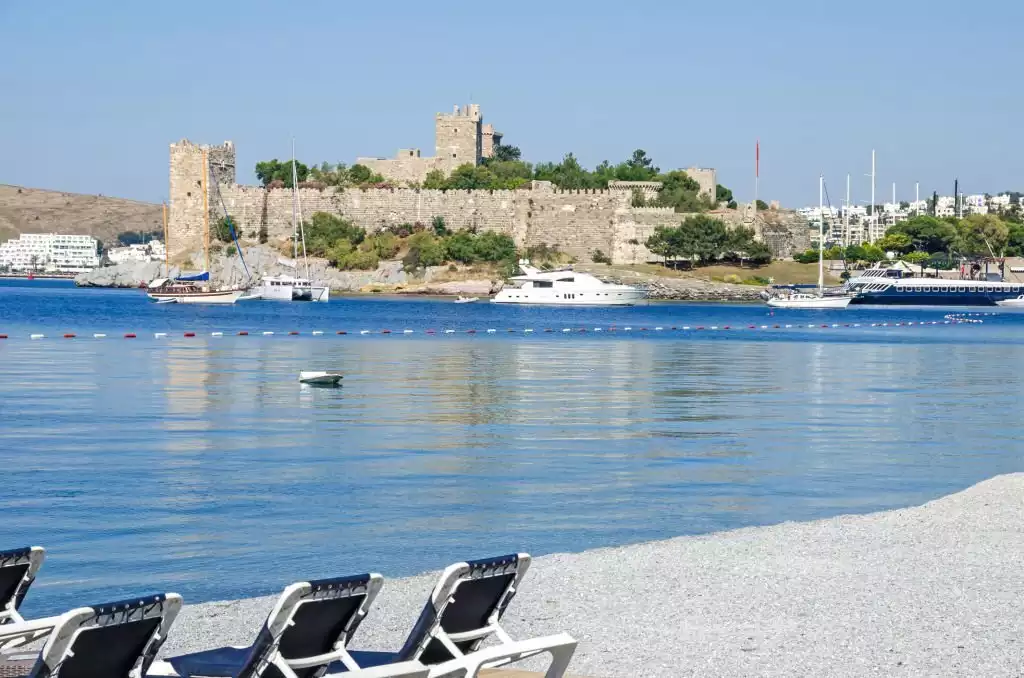 1 / 2
Hidden Bodrum: Halicarnassus and the layers of antiquity
Hidden Bodrum brings to mind first the settlement known in antiquity as Halicarnassus. Early traces of settlement and a harbour identity prominent from the Carian period onwards define the town’s character; in the 4th century BC, under the Carian satrap Mausolus, the town became an important centre and the Mausoleum, counted among the Seven Wonders of the Ancient World, was built.
Caria, Persia, Macedonia and the empires
After the Carian period, Persian influence, the arrival of Alexander the Great and then the Roman, Byzantine, Seljuk and Ottoman periods form the historical layers of Bodrum. Coastal defences and the harbour were shaped over the centuries to meet different needs.
The gap left by lost and removed heritage
Old mosaics from Bodrum and important pieces of the Mausoleum now sit in collections abroad, and ruins in surrounding settlements have been damaged over time; these factors can make the town’s ancient depth hard to notice at first glance.
Open-air heritage and museums
Bodrum Castle, the Ancient Theatre, the remains of the Myndos Gate and the underwater and archaeology museums are key stops for those who want to explore Hidden Bodrum first-hand.
Hidden Bodrum: the 1856–1857 excavations, Charles Thomas Newton and the Myndos Gate
British archaeologist Charles Thomas Newton (1816–1894) is one of the leading names in research on Halicarnassus and the Mausoleum thanks to the excavations he carried out in Bodrum in 1856–1857. While the removal of the finds to London remains a subject of historical debate, Newton’s work and museum initiatives drew attention to the region’s ancient past.
- 7-kilometre city wall and the Myndos Gate: One of the defensive points of the long wall that surrounded ancient Halicarnassus, the Myndos Gate bears traces of 4th-century BC defensive architecture and stands out for its vaulted passage.
- Myndos mythology and the harbour story: Local mythology features King Car, Byblis, Myndos and the sea-related figure of Amphitrite; these stories reflect the legendary layers of the town’s memory.
- Protecting the ruins: As the town grows and time passes, protecting the ancient remains becomes more critical; take care of the historic fabric when visiting.
Hidden Bodrum: the Great Population Exchange and Cretan immigrants
Hidden Bodrum’s recent history was shaped above all by population movements and new settlements. With the Great Population Exchange under the 1923 Treaty of Lausanne, the Greek population of the area left and families from Anatolia were settled in their place, changing the town’s social fabric fundamentally.
The 1923 Great Population Exchange and social change
With families moving into the houses left empty after the exchange, daily life, neighbourhood culture and the town’s identity entered a new era; traces of this period can be seen in different parts of the peninsula.
The cultural contribution of Cretan immigrants
Families who migrated from Crete in the Ottoman period and settled in Bodrum made important contributions to the town’s multi-layered culture through seafaring, fishing, cooking, everyday traditions and way of life.
Hidden Bodrum: the Fisherman of Halicarnassus, Zeki Müren and tourism
After arriving in Bodrum in 1925, Cevat Şakir Kabaağaçlı (the Fisherman of Halicarnassus) brought the town’s sea, people and nature into his writing, strengthening Bodrum’s place on the literary and cultural map. In the following years, the interest of artists and visitors made the town better known.
- The legacy of the Fisherman of Halicarnassus: His works focusing on the sea and Aegean culture helped Bodrum become known not just as a stretch of coast but as a place with a strong story and way of life.
- Zeki Müren and artistic memory: The singer Zeki Müren, who settled in Bodrum in the 1960s, is one of the cultural figures remembered with respect; the house where he lived can now be visited as a museum.
- Tourism and construction from the 1980s to today: Tourism, which began in a small fishing town, grew rapidly through the 1980s and 1990s, and with more homes and resorts, protecting the natural and architectural fabric became a bigger issue.
Hidden Bodrum in its houses: traditional homes and the seasons
Hidden Bodrum’s culture is best understood by looking together at traditional house types shaped by the local climate and geography and at the atmosphere the seasons bring to the town.
| Topic | Features and use | Cultural and practical meaning |
|---|---|---|
| Stone houses and white houses | Local stonework, thick walls, tiled roofs and a courtyard plan | Traditional coastal architecture that keeps cool in summer and balances heat in winter |
| Vineyard houses and garden buildings | Vineyard, courtyard and veranda layout with shaded outdoor spaces | Supports outdoor living and a culture of farming and natural produce |
| Spring and autumn | Milder weather, quiet streets and pleasant sea temperatures | The best periods for historical and cultural walks and a balanced trip |
| Summer and winter | High heat and crowds in summer; cooler, quieter days in winter | Plan clothing and sun protection by season and check outdoor sites and programmes |
Tips, exploring the area and getting around
Hidden Bodrum walks call for respecting the sensitivity of historic sites and checking current visiting conditions in advance.
- Rules at historic and natural sites: Do not climb on or damage ancient ruins, walls and city walls; check opening hours and entry conditions when visiting museums and archaeological sites.
- Season and safety: In summer, carry a hat, water and sunscreen against the sun and heat; watch out for slippery ground on coastal and bay walks.
- Nearby activities and transport: In Bodrum centre you can combine a castle and seafront walk, museum visits and short trips to nearby bays and neighbourhoods; within the district you can use minibuses (dolmuş), taxis or your own car.
Hidden Bodrum: periods and themes
The boxes below briefly summarise the main periods and themes in this Hidden Bodrum guide.
Highlights: Rich historical layers from antiquity to the republic and recent times, the memory of exchange and migration, traditional architecture and the calm of spring and autumn.
Things to watch: The need to protect historic remains, the fact that some finds are in collections elsewhere, and keeping plans flexible in hot, busy periods.
Hidden Bodrum FAQ
Why the name ‘Hidden Bodrum’?
It is used to tell, beyond Bodrum’s image as just a summer holiday spot or a single famous name, the story of ancient Halicarnassus, its walls and gates, the history of the Population Exchange and migration from Crete, its traditional houses and its cultural layers together.
What was Bodrum called in antiquity?
In antiquity it was known as Halicarnassus and was one of the important settlements of the Caria region.
What is the Myndos Gate and where is it?
It is one of the main gate structures of the defensive walls that surrounded the ancient city, and among the visible remains of Bodrum’s ancient defences.
When did Charles Thomas Newton work in Bodrum?
He carried out archaeological excavations in Bodrum in 1856–1857; part of the finds were taken to collections in London, bringing the region’s archaeology to international attention.
How did the Great Population Exchange affect Bodrum?
With the population exchange of 1923, the town’s demographic structure changed, and with families arriving in place of those who left, a new era began in social and cultural life.
What traces have Cretan immigrants left on Bodrum culture?
From seafaring and fishing to cooking and everyday life, the cultural traces left by immigrants from Crete are part of Bodrum’s memory.
Why are the Fisherman of Halicarnassus and Zeki Müren important for Bodrum?
The Fisherman of Halicarnassus helped make the town known by describing Bodrum’s nature and people in his writing; Zeki Müren left his mark on the town’s cultural memory through the years he lived in Bodrum and his house, now a museum.
What are the main features of traditional Bodrum houses?
Elements such as local stone, tiled roofs and courtyard and garden layouts developed to suit the region’s hot climate and wind and sun conditions.
What is the best season for exploring Hidden Bodrum?
Spring and autumn, when temperatures are more balanced and crowds are calmer, are very well suited to cultural and historical walks.
How can I contribute to the guide?
You can send us verifiable information and suggestions about Bodrum’s local history, cultural heritage or guide content via the Bodrumlu.com contact page.