

The Mausoleum of Halicarnassus is one of the most important archaeological landmarks in Turkey and one of the original Seven Wonders of the Ancient World. Located in the heart of modern Bodrum, this monumental tomb shaped architectural history so profoundly that the word “mausoleum” is now used globally to describe grand tombs.
Although the original structure no longer stands in full glory, the site remains one of Bodrum’s most significant cultural attractions. For visitors interested in ancient civilizations, architecture, and Mediterranean history, the Mausoleum at Halicarnassus is a must-see destination.
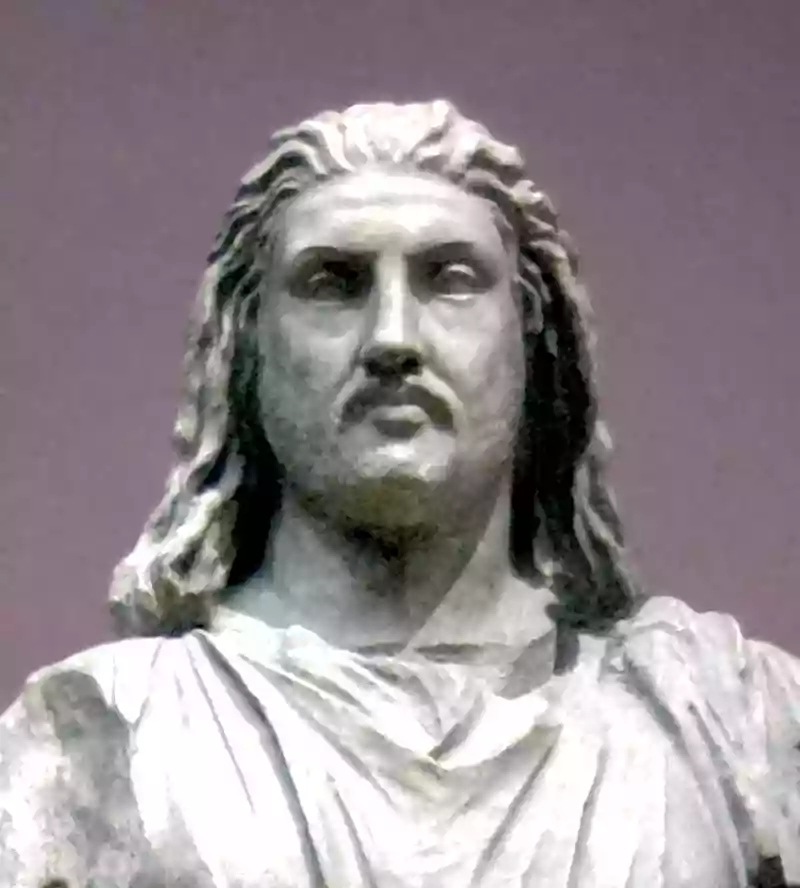
Mausoleum at Halicarnassus
The Complete Historical Guide to One of the Seven Wonders of the Ancient World
The Historical Background of the Mausoleum at Halicarnassus
The Mausoleum was built in 353 BC in the ancient city of Halicarnassus, today known as Bodrum. It was commissioned by Artemisia II in memory of her husband and brother, Mausolus, who ruled the Carian region under the Persian Empire.
Mausolus was a powerful satrap (governor) who expanded and strengthened Halicarnassus. After his death, Artemisia ordered the construction of an extraordinary tomb that would reflect his power and prestige. The result was one of the most magnificent monuments ever built in the ancient world.
The structure became so admired that it was later recognized as one of the Seven Wonders of the Ancient World.
Architectural Design and Structure
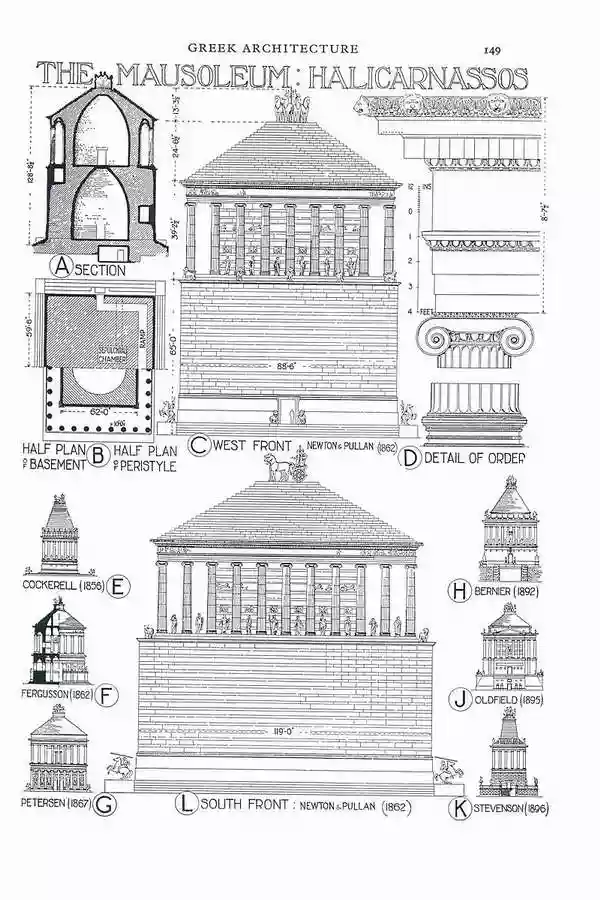
The Mausoleum at Halicarnassus was a masterpiece of combined architectural styles, blending Greek, Egyptian, and Lycian influences.
Dimensions and Height
The structure stood approximately 45 meters (148 feet) tall, making it one of the tallest monuments of its time.
Three Main Sections
- Massive Rectangular Base
Built from white marble, this platform formed the foundation and supported the upper structure. - Columned Section
36 Ionic columns surrounded the central chamber, creating an open and elegant appearance. - Pyramid Roof and Sculpture
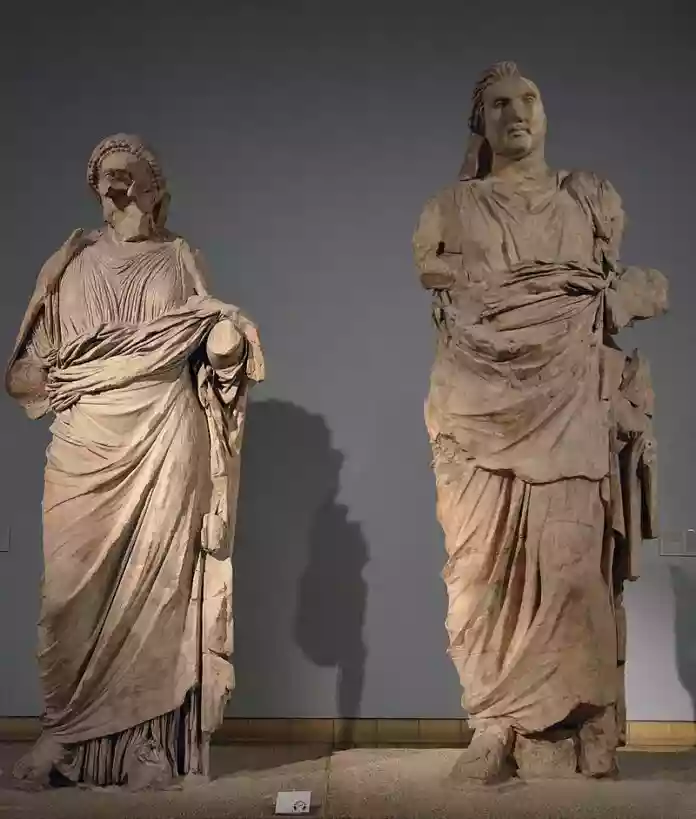
The roof formed a stepped pyramid crowned with a colossal marble statue of Mausolus and Artemisia riding a four-horse chariot. - Mausoleum of Halicarnassus
This unique design distinguished it from traditional Greek temples or Egyptian tombs.
Sculptural Excellence
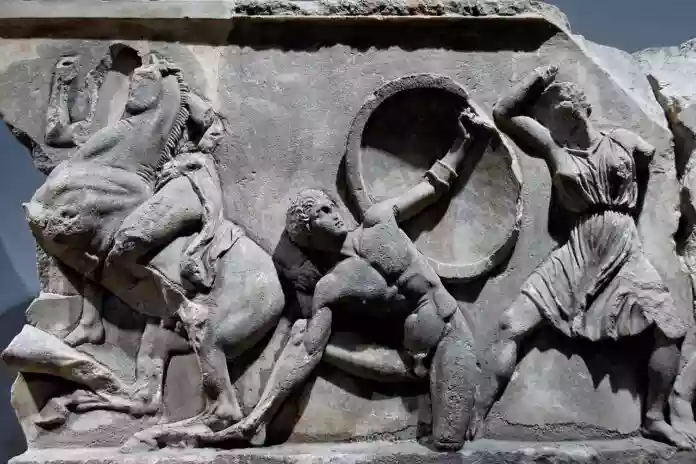
The Mausoleum was decorated by some of the most famous Greek sculptors of the time, including Scopas, Bryaxis, Leochares, and Timotheus.
The friezes and statues depicted:
- Battle scenes
- Mythological figures
- Warriors and gods
- Lions guarding the structure
- Mausoleum of Halicarnassus
The artistic quality was considered extraordinary, contributing greatly to its reputation as a Wonder of the Ancient World.
Why It Became One of the Seven Wonders
The Mausoleum at Halicarnassus was not only impressive because of its size. It stood out for:
- Architectural innovation
- Artistic detail
- Engineering mastery
- Cultural fusion
It symbolized power, grief, love, and ambition in one monumental structure.
Its fame spread throughout the Mediterranean world, earning it a place among the Seven Wonders.
What Happened to the Mausoleum?
The monument survived for over 1,500 years but gradually suffered damage from earthquakes during the Middle Ages.
By the 15th century, much of the structure had collapsed. Stones from the ruins were later reused by the Knights of St. John to construct:
- Bodrum Castle
Many of the original sculptures were eventually transported to the British Museum in London, where they remain on display today.
The Archaeological Site Today
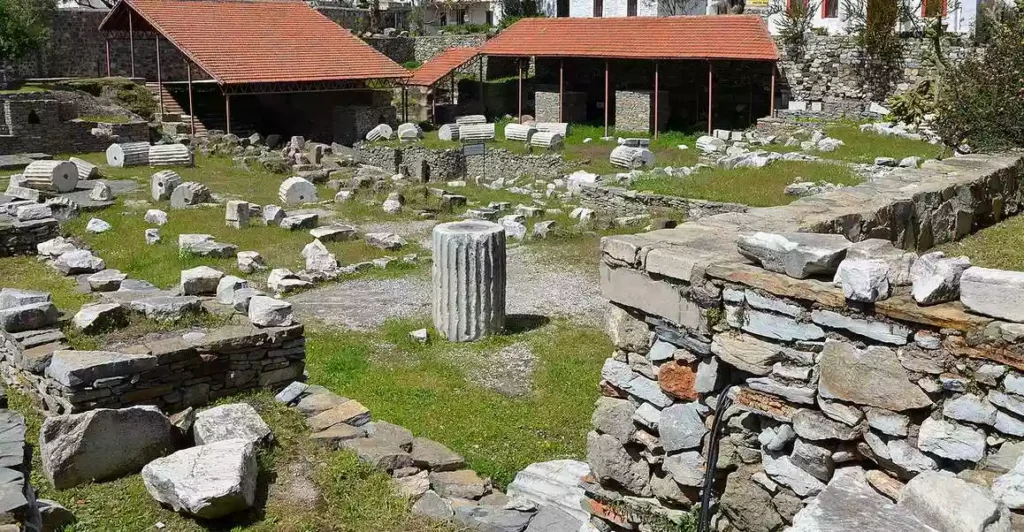
Today, visitors to the Mausoleum at Halicarnassus can explore:
- The original foundation layout
- Stone blocks and column fragments
- Reconstruction models
- Informational panels explaining its structure
- Mausoleum of Halicarnassus
Although the towering monument no longer stands, walking through the site allows visitors to imagine the scale and grandeur of what once existed.
The archaeological area is calm, educational, and centrally located in Bodrum.
Location and Accessibility
The Mausoleum at Halicarnassus is located in central Bodrum, within walking distance of:
- Bodrum Marina
- Bodrum Ancient Theatre
Its central position makes it easy to include in a half-day historical walking tour of Bodrum.
Cultural Importance for Bodrum
The Mausoleum is not only an ancient ruin; it is part of Bodrum’s identity. The city’s historical name, Halicarnassus, is deeply connected to this monument.
Bodrum’s reputation as a historical and cultural destination is strongly linked to the legacy of the Mausoleum. Together with the Ancient Theatre and Bodrum Castle, it forms a powerful trio of historical landmarks that define the region.
Visiting Information
- Open as an archaeological site
- Entry fees are generally affordable
- Best visited in the morning or late afternoon
- Comfortable walking shoes recommended
Spring and autumn are ideal seasons due to mild weather.
Why You Should Visit the Mausoleum at Halicarnassus
Visiting this site offers:
- Direct connection to one of the Seven Wonders
- Insight into ancient Carian and Greek history
- Unique architectural education
- Cultural enrichment
- Historical photography opportunities
- Mausoleum of Halicarnassus
Standing on the original foundations of such a monumental structure creates a powerful sense of historical continuity.
The Word “Mausoleum” and Its Legacy
The global use of the word “mausoleum” originates from King Mausolus. His tomb was so extraordinary that his name became synonymous with monumental burial architecture.
Many famous tombs around the world were inspired by this original structure.
Archaeological Discoveries and Research
Excavations in the 19th century revealed key elements of the monument’s structure. Archaeologists were able to determine:
- Exact foundation dimensions
- Column arrangements
- Decorative elements
- Structural engineering methods
- Mausoleum of Halicarnassus
These discoveries allowed historians to create detailed reconstructions of how the Mausoleum once looked.
Photography and Exploration Tips
- Visit during golden hour for softer light
- Combine with Ancient Theatre visit
- Allow 45–60 minutes for exploration
- Read informational boards to understand layout
The site offers a quiet and reflective atmosphere compared to Bodrum’s lively marina area.
Conclusion
The Mausoleum at Halicarnassus remains one of the most important historical landmarks in Turkey and one of the most influential monuments of the ancient world. Although earthquakes and time have reduced it to ruins, its historical significance continues to attract visitors from around the globe.
As one of the Seven Wonders of the Ancient World, the Mausoleum at Halicarnassus represents architectural brilliance, artistic excellence, and cultural legacy. For anyone visiting Bodrum, it stands as a powerful reminder that this modern coastal town was once one of the most prestigious cities of antiquity.
Mausoleum of Halicarnassus
Mausoleum of Halicarnassus, The Mausoleum of Halicarnassus was a monumental tomb built in the ancient city of Halicarnassus, which is now modern-day Bodrum, Turkey. The mausoleum was constructed in the mid-4th century BC as a final resting place for the ruler Mausolus and his queen and sister Artemisia II.
Construction and Design
The Mausoleum of Halicarnassus was designed by Greek architects Satyros and Pythius, who were commissioned by Artemisia II after the death of her husband Mausolus. The tomb was constructed over a period of several years and featured a mix of architectural styles, including Greek, Lycian, and Egyptian influences.
The mausoleum was built on a high platform, with a base of over 30 meters wide and a height of over 10 meters. The structure was decorated with ornate friezes, sculptures, and columns, including a large chariot group at the top of the monument.
The tomb itself was located in the center of the structure and was surrounded by a series of chambers and corridors. The tomb was made of white marble and was decorated with intricate carvings and reliefs, depicting scenes from the life of Mausolus and Artemisia II.
History
The Mausoleum of Halicarnassus was considered one of the Seven Wonders of the Ancient World, and it was admired for its beauty and grandeur. However, the structure was damaged by earthquakes over the years, and it was eventually dismantled by crusaders in the 15th century to build the Castle of St. Peter in Bodrum.
Today, only a few fragments of the Mausoleum of Halicarnassus remain, including a few sculptures and reliefs that were excavated in the 19th century. These artifacts can be seen at the British Museum in London and the Museum of Mausolus in Bodrum.
Conquest
The conquest of Halicarnassus and its famous Mausoleum is a notable event in history, as it marked the beginning of the end for one of the Seven Wonders of the Ancient World.
In 334 BC, Alexander the Great began his conquest of the Persian Empire and set his sights on the city of Halicarnassus, which was then ruled by Queen Ada of Caria. Ada had been deposed by her brother, but she managed to regain control of the city with the help of the Greek mercenary leader, Memnon of Rhodes.
When Alexander arrived at Halicarnassus, he found that the city was heavily fortified, with walls, towers, and gates guarding its approaches. However, he was determined to capture the city, and after a month-long siege, his army managed to breach the walls and enter the city.
During the siege, the Mausoleum of Halicarnassus was also damaged by Alexander’s army, and some of the sculptures and decorative elements were destroyed. However, the tomb itself survived the conquest, and it continued to stand for many centuries afterward.
After the conquest of Halicarnassus, Alexander continued his campaign across Asia and the Middle East, establishing one of the largest empires in history. However, the Mausoleum of Halicarnassus eventually fell into disrepair, and it was largely destroyed by earthquakes and looting over the centuries.
Today, the ruins of the Mausoleum of Halicarnassus can be seen in the town of Bodrum, Turkey, where it once stood. While much of the structure has been lost to time, some fragments and sculptures have survived, and they can be viewed at the Museum of Mausolus in Bodrum.
In the 4th century BC, Halicarnassus was the capital of a small regional kingdom of Caria within the Achaemenid Empire on the western coast of Asia Minor.
In 377 BC, the nominal ruler of the region, Hecatomnus of Milas, died and left control of the kingdom to his son, Mausolus. Hecatomnus, a local dynast under the Persians, took control of several of the neighboring cities and districts. After Artemisia and Mausolus, he had several other daughters and sons: Ada (adoptive mother of Alexander the Great), Idrieus, and Pixodarus. Mausolus extended his territory as far as the southwest coast of Anatolia, invading, in particular, the territory of Lycia, remarkable for its numerous monumental tombs such as the Tombs at Xanthos, from which he took his inspiration for his mausoleum.
Artemisia and Mausolus ruled from Halicarnassus over the surrounding territory for 24 years. Mausolus, although descended from local people, spoke Greek and admired the Greek way of life and government. He founded many cities of Greek design along the coast and encouraged Greek democratic traditions.
Mausolus decided to build a new capital, one as safe from capture as it was magnificent to be seen. He chose the city of Halicarnassus. Artemisia and Mausolus spent huge amounts of tax money to embellish the city. They commissioned statues, temples and buildings of gleaming marble. In 353 BC, Mausolus died, leaving Artemisia to rule alone. As the Persian satrap, and as the Hecatomnid dynast, Mausolus had planned for himself an elaborate tomb. When he died the project was continued by his siblings. The tomb became so famous that Mausolus’s name is now the eponym for all stately tombs, in the word mausoleum.
Artemisia lived for only two years after the death of her husband. The urns with their ashes were placed in the yet unfinished tomb. As a form of sacrifice, the bodies of a large number of dead animals were placed on the stairs leading to the tomb, and then the stairs were filled with stones and rubble, sealing the access. According to the historian Pliny the Elder, the craftsmen decided to stay and finish the work after the death of their patron “considering that it was at once a memorial of his own fame and of the sculptor’s art”.
Visiting the Mausoleum of Halicarnassus
While the Mausoleum of Halicarnassus is no longer standing, visitors to Bodrum can still learn about its history and see some of the remaining artifacts. The Museum of Mausolus in Bodrum features a collection of sculptures, reliefs, and architectural fragments from the mausoleum, as well as other ancient sites in the area.
The museum is open to visitors daily, and guided tours are available for those who want to learn more about the mausoleum’s history and significance. The museum is located in central Bodrum, making it easily accessible for tourists visiting the area.
In conclusion, the Mausoleum of Halicarnassus was a remarkable structure that was admired for its beauty and grandeur. While the monument no longer exists, visitors can still learn about its history and see some of the remaining artifacts at the Museum of Mausolus in Bodrum. The mausoleum remains an important symbol of ancient Greek and Lycian culture and is a testament to the incredible achievements of ancient architects and craftsmen. Mausoleum of Halicarnassus

