Bodrum HistoryFrom Halicarnassus to today’s harbour town: Carians, Herodotus, Mausolus, Alexander, the Knights, the Ottomans and the Republic
Bodrum History runs from ancient Halicarnassus to the Knights’ castle and today’s harbour town; the periods, a timeline and historic sites to visit.
Walking through central Bodrum, within a few hundred metres you move from the foundations of a 2,400-year-old tomb to a 15th-century castle and on to the traces of the writers who made the town famous in the 20th century. Here we tell the story period by period, based on sources.
- Ancient name
- Halicarnassus
- Ancient region
- Caria
- Landmarks
- Mausoleum and Bodrum Castle
- Famous native
- The historian Herodotus
Bodrum History in photos
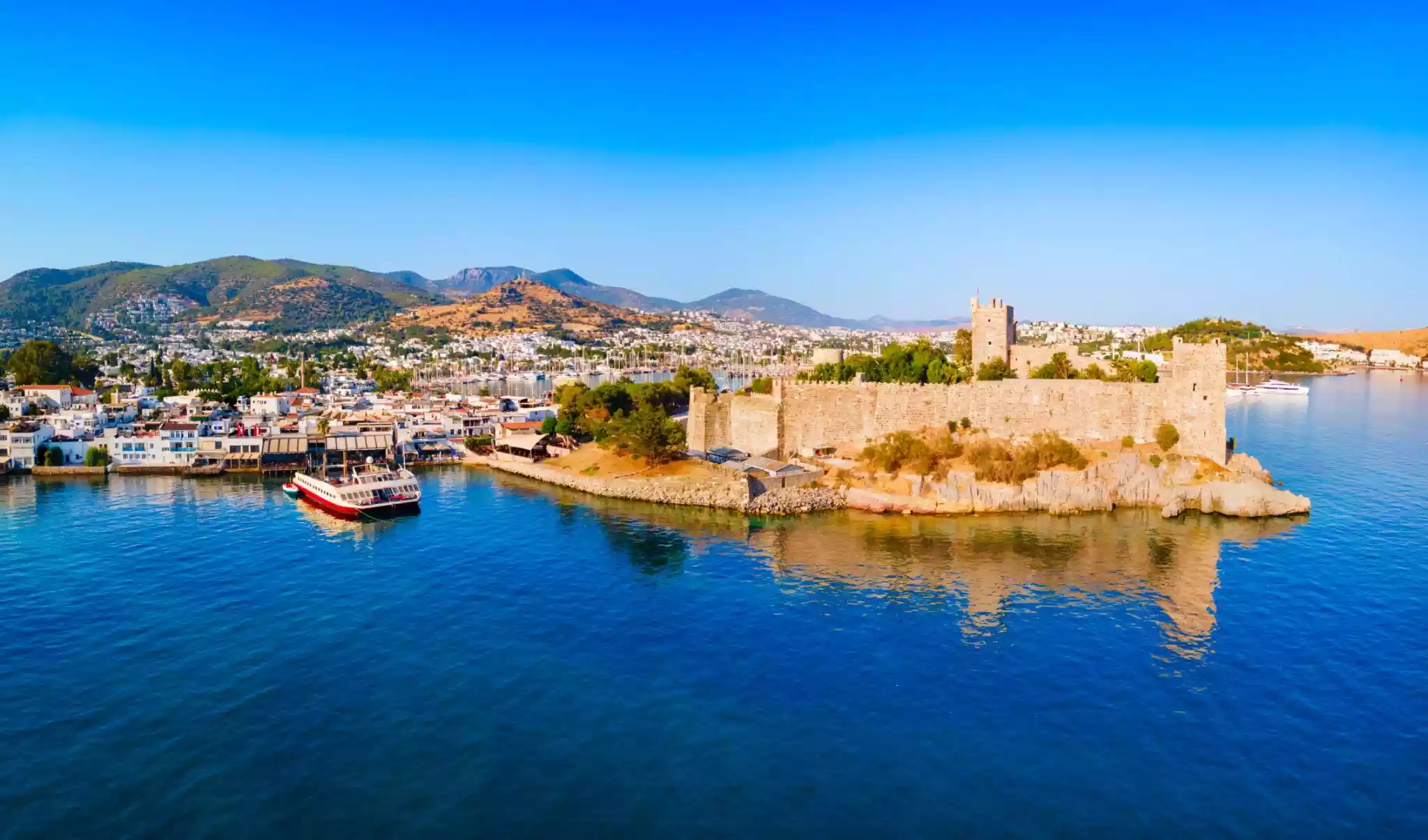 1 / 8
Bodrum History timeline
The timeline below lists the main events of Bodrum History in order. Dates for antiquity follow sources such as Britannica and Herodotus; dates for the castle follow its recorded building history.
- Carians and Leleges
The peninsula was home to the Carians and the Leleges; small towns such as Pedasa stood on the hills.
- Dorian Halicarnassus
The city was founded by Dorian settlers and joined the league of Dorian cities; according to Herodotus it was later expelled over a prize tripod.
- Artemisia I at Salamis
Artemisia I, queen of Halicarnassus, commanded ships in the fleet of the Persian king Xerxes.
- Herodotus
Herodotus, known as the “father of history”, was born in Halicarnassus.
- Mausolus’ capital
Mausolus, satrap of Caria, moved his capital from Mylasa (Milas) to Halicarnassus.
- Death of Mausolus and the Mausoleum
Mausolus died; work on his tomb continued under his wife Artemisia II. The Mausoleum became one of the Seven Wonders of the Ancient World.
- Alexander’s siege
Defended by Memnon of Rhodes, the city held out against Alexander the Great for a long time.
- Roman rule
After the Hellenistic kingdoms, the city came under Roman rule.
- Bodrum Castle
The Knights of St John began building a castle on the rocky headland of the harbour; stones from the Mausoleum were reused in it over time.
- Ottoman period
With the fall of Rhodes to the Ottomans, the Knights left Bodrum; a minaret was added to the castle chapel, which became a mosque.
- Newton’s excavations
British archaeologist Charles Newton excavated the Mausoleum; sculptures and reliefs were taken to the British Museum.
- Castle shelled
During the First World War a French warship shelled the castle and destroyed the minaret.
- Fisherman of Halicarnassus
Cevat Şakir Kabaağaçlı arrived in Bodrum in exile and made the town known through his writing.
- Museum of Underwater Archaeology
The castle was turned into a museum of underwater archaeology.
Bodrum History in antiquity: Caria and Halicarnassus
The Bodrum Peninsula lay on the coast of ancient Caria. Its first peoples were the Carians and the Leleges; Pedasa, Theangela and other small hilltop towns belong to this period. Halicarnassus itself was a harbour city founded by Dorian settlers. Over time it blended with Carian culture and became the first great centre of Bodrum History.
In the 5th century BC Halicarnassus was under Persian rule and governed by a local dynasty. Its best-known member, Artemisia I, commanded ships in the Persian fleet at Salamis in 480 BC. Herodotus, born in the city in the same century, became known as the “father of history” for his account of the Persian Wars. We tell the full story of the ancient city in our Bodrum Halicarnassus guide.
Mausolus and the Mausoleum
The brightest chapter of Bodrum History is the 4th century BC. Around 370 BC Mausolus, satrap of Caria, moved his capital from Mylasa to Halicarnassus. He settled the people of nearby Lelegian towns in the new capital, surrounded it with walls and rebuilt the harbour and palace. The Myndos Gate is the most impressive surviving part of these walls.
In Bodrum History, Mausolus’ death in 353 BC is a turning point. Work on his tomb continued under his wife Artemisia II, and the leading sculptors of the day decorated it. With a tall base, colonnade, stepped pyramid roof and a four-horse chariot group on top, the Mausoleum became one of the Seven Wonders of the Ancient World, and the word “mausoleum” comes from it. Britannica’s Halicarnassus article gives a useful overview.
Alexander’s siege, Rome and Byzantium
In 334 BC, in a famous episode of Bodrum History, Alexander the Great besieged Halicarnassus during his campaign in Anatolia. The city was defended by Memnon of Rhodes, and the siege lasted a long time. The walls and the area around the Myndos Gate saw some of the fiercest fighting, and part of the city was damaged by the end.
After Alexander the city passed between Hellenistic kingdoms and came under Roman rule in 129 BC. Halicarnassus lived on through the Roman and Byzantine periods but lost its former importance. In the Middle Ages the peninsula came under the influence of the Menteşe Beylik. By then earthquakes had badly damaged the Mausoleum. The next chapter of Bodrum History arrived from the sea with the Knights.
The Knights of St John and Bodrum Castle
At the start of the 15th century, around 1404, the Knights of St John based in Rhodes began building a castle on the rocky headland between the two bays and dedicated it to St Peter. Stones and reliefs taken from the ruins of the Mausoleum were used in its construction and later strengthening. You can still spot ancient blocks in the castle walls today.
In Bodrum History the castle grew with towers built by knights from different European nations, which is why the English, French, Italian and German towers carry separate names. Wikipedia’s Bodrum Castle article has more on its building phases.
Bodrum in the Ottoman era
When Suleiman the Magnificent took Rhodes in 1522, the Knights also gave up Bodrum, and the castle passed to the Ottomans in 1523. A minaret was added to the castle chapel, which became a mosque. In the Ottoman era Bodrum History turned a quieter page; Bodrum was a small town living from sponge diving, seafaring and farming. Many of the domed Bodrum cisterns you still see in the countryside date from this period.
During the First World War, in 1915, a French warship shelled the castle; the minaret was destroyed and some towers were damaged. After the war Italian forces were in Bodrum for a time; this ended during the Turkish War of Independence.
The Republic and modern Bodrum
In the Republican era literature entered Bodrum History. Cevat Şakir Kabaağaçlı arrived in Bodrum in exile in 1925 and made the town known through stories and novels signed “the Fisherman of Halicarnassus”. The boat trips he and his friends made along the coast are seen as the beginning of today’s Blue Cruise tradition.
In the 1960s, a new chapter of Bodrum History began when the castle was turned into a museum displaying finds from underwater excavations. Today the Bodrum Museum of Underwater Archaeology is regarded as one of the leading museums in its field. Since the late 20th century tourism has been the town’s main source of income. Read more about today’s town in About Bodrum.
Key people in Bodrum History
You can also read Bodrum History through a few names. Each of these people stands for a different period of the town:
- Herodotus: The historian born in Halicarnassus. His account of the Persian Wars is seen as the first great work of history in the West.
- Artemisia I: The queen who ruled the city in the 5th century BC and commanded ships in the Persian fleet at Salamis.
- Mausolus: Satrap of Caria. He made Halicarnassus his capital; the walls and grand buildings rose in his time.
- Artemisia II: Wife and successor of Mausolus; work on the Mausoleum continued under her.
- Memnon of Rhodes: The commander who defended the city against Alexander the Great in 334 BC.
- Cevat Şakir Kabaağaçlı: The Fisherman of Halicarnassus, who added literature and the Blue Cruise to Bodrum History in the 20th century.
Together these names show that the town has been both a harbour and a cultural centre throughout Bodrum History.
Common myths about Bodrum History
- “Bodrum Castle is ancient.” No. The castle was built by the Knights of St John in the 15th century; only some of the stones in its walls are ancient.
- “The Knights destroyed the Mausoleum.” Not exactly. Earthquakes had badly damaged the monument before the Knights arrived; they took the remaining stones for the castle.
- “Halicarnassus and Bodrum are different places.” No. Today’s Bodrum town stands on top of ancient Halicarnassus.
- “The Mausoleum’s statues are in Bodrum.” The site has foundations and fragments; the most important statues and reliefs have been in the British Museum in London since the 19th century.
A Bodrum History walking route
The key sites of Bodrum History are in the town centre, within walking distance of each other. A one-day route:
- Morning: Bodrum Castle and the Museum of Underwater Archaeology. See the towers, courtyards and shipwreck finds; look out for ancient blocks in the walls.
- Midday: the bazaar and the Mausoleum. Take a break in the bazaar, then visit the foundations of the monument in Tepecik.
- Afternoon: Myndos Gate. Walk west to see the gate of Mausolus’ walls and the remains of the moat.
- Late afternoon: the Ancient Theatre. End the day on the upper rows of the theatre on the Göktepe slope, with views of the castle and bay.
For a Bodrum History walk, remember that museum hours change with the season, so check the current times before you go. In summer, leave the open-air sites for the morning or late afternoon. For the landscape of the peninsula, see our Bodrum geography guide, and for the wider area our Bodrum travel guide.
Bodrum History: frequently asked questions
What was Bodrum’s ancient name?
The ancient city on the site of today’s Bodrum town was Halicarnassus.
Who founded Halicarnassus?
It was founded by Dorian settlers; the older peoples of the peninsula were the Carians and the Leleges.
Who was the Mausoleum built for?
For Mausolus, satrap of Caria. He died in 353 BC, and work continued under his wife Artemisia II.
When did Alexander the Great besiege Bodrum?
In 334 BC. The city was defended by Memnon of Rhodes and held out for a long time.
Who built Bodrum Castle?
The Knights of St John began building it at the start of the 15th century, around 1404.
When did Bodrum become Ottoman?
After Rhodes fell in 1522 the Knights left, and the castle passed to the Ottomans in 1523.
Where are the statues of the Mausoleum?
The most important statues and reliefs were taken to the British Museum in London after Charles Newton’s excavations in 1856–1857.
Who was the Fisherman of Halicarnassus?
The pen name of Cevat Şakir Kabaağaçlı, who arrived in Bodrum in exile in 1925 and made the town known through his writing.
Which sites should I visit for Bodrum History?
Bodrum Castle and the Museum of Underwater Archaeology, the Mausoleum, the Myndos Gate and the Ancient Theatre are the main stops.
Are there historic sites in Güvercinlik and Mumcular?
Near Mumcular you can see ancient Theangela and old cisterns in the countryside; Güvercinlik is mainly a fishing and harbour village.