

Pamukkale Tour is one of the most breathtaking and unforgettable travel experiences in Turkey, offering visitors the chance to explore the world-famous white travertine terraces and the ancient city of Hierapolis in a single day. Known as the “Cotton Castle,” Pamukkale is a UNESCO World Heritage Site that attracts millions of travelers each year. A Pamukkale Tour allows you to walk barefoot across natural thermal pools, swim in mineral-rich waters, and discover Roman ruins that date back over 2,000 years. For anyone visiting Turkey, joining a Pamukkale Tour is considered one of the top bucket-list excursions.
Pamukkale Tour experiences are especially popular among tourists staying in Bodrum, Marmaris, Fethiye, Antalya, and even Istanbul. The combination of natural beauty, historical significance, and relaxing thermal waters makes a Pamukkale Tour both educational and rejuvenating. Whether you are interested in photography, ancient history, wellness tourism, or simply witnessing one of Turkey’s most iconic landscapes, a Pamukkale Tour offers a unique blend of culture, relaxation, and adventure that stands out among other day trips.

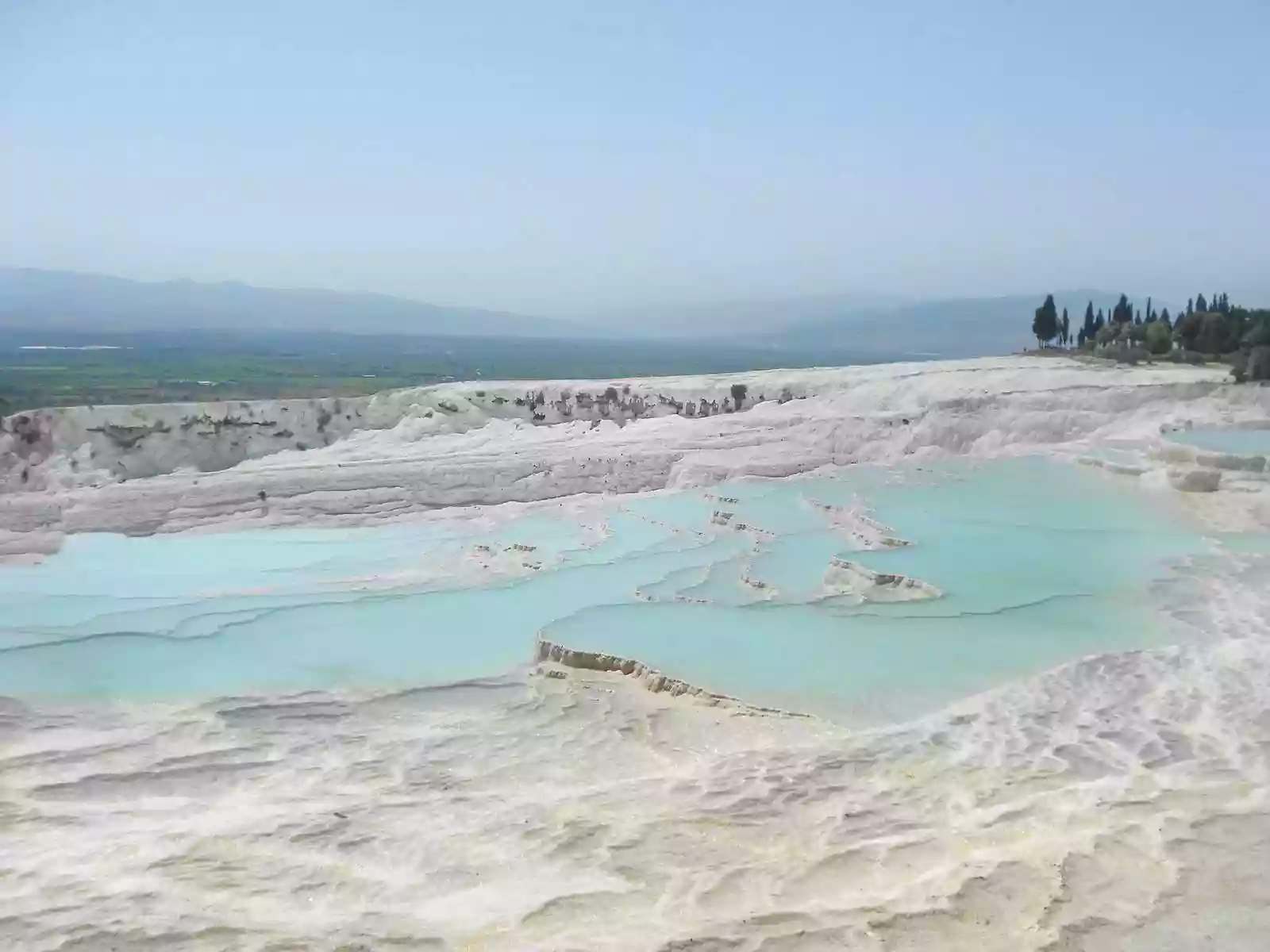


Pamukkale Tour
What Is a Pamukkale Tour?
A Pamukkale Tour is a guided excursion to the natural travertine terraces of Pamukkale and the ancient Greco-Roman city of Hierapolis, located in Denizli Province in southwestern Turkey. The word “Pamukkale” means “cotton castle” in Turkish, referring to the dazzling white calcium formations created by thermal spring waters flowing down the hillside.
A standard Pamukkale Tour typically includes:
- Transportation (bus or private transfer)
- Professional tour guide
- Entrance tickets to Pamukkale and Hierapolis
- Visit to Cleopatra’s Pool (optional)
- Lunch at a local restaurant
The Pamukkale Tour is often organized as a full-day trip due to travel distance from coastal resort towns.
How Does a Pamukkale Tour Work?
Hotel Pickup and Transportation
Most Pamukkale Tour programs begin early in the morning with hotel pickup. Depending on your location, travel time can range from 2.5 to 4 hours. Modern air-conditioned vehicles ensure comfortable transportation.
Some tours also include short rest stops for breakfast and refreshments during the journey.
Arrival at Pamukkale
Upon arrival, your guide provides historical and geological information about Pamukkale. Visitors enter through designated gates and begin walking along the white travertine terraces.
Shoes must be removed to protect the natural formations. Walking barefoot through warm thermal pools is one of the highlights of any Pamukkale Tour.
Exploring Hierapolis
Above the travertines lies the ancient city of Hierapolis. During a Pamukkale Tour, you can explore:
- The Roman theater
- Ancient baths
- Temple ruins
- Necropolis (ancient cemetery)
- Old city gates
The combination of natural beauty and historical architecture makes the Pamukkale Tour unique.
Cleopatra’s Pool Experience
Many Pamukkale Tour packages offer optional swimming in Cleopatra’s Pool, a thermal pool filled with submerged ancient columns. The warm mineral water is believed to have therapeutic properties.
Who Should Join a Pamukkale Tour?
A Pamukkale Tour is ideal for:
- History enthusiasts
- Nature lovers
- Photographers
- Wellness travelers
- Families
- Couples
The site is suitable for most age groups, although visitors should be prepared for moderate walking.
Benefits of a Pamukkale Tour
Unique Natural Wonder
Pamukkale’s travertine terraces are one of the most unique natural formations in the world. A Pamukkale Tour offers the chance to witness a rare geological phenomenon up close.
Cultural and Historical Value
The ancient city of Hierapolis adds historical depth to the experience. Walking among Roman ruins enhances the educational value of the Pamukkale Tour.
Wellness and Relaxation
The mineral-rich thermal waters are believed to support skin health and relaxation. Many visitors feel refreshed after walking through the warm pools.
Incredible Photography Opportunities
Pamukkale Tour participants often capture stunning photos of white terraces against bright blue skies.
Possible Disadvantages and Considerations
Long Travel Time
From coastal resorts, the Pamukkale Tour can require several hours of travel each way.
Summer Heat
During peak summer months, temperatures can be very high. Wearing a hat and carrying water is essential.
Crowds
As one of Turkey’s most popular attractions, Pamukkale can be crowded, especially in high season.
How Long Does a Pamukkale Tour Last?
A typical Pamukkale Tour lasts 10 to 12 hours, including transportation time. Although it is a full-day excursion, the experience leaves lasting memories.
The visual impact of the white terraces and the historical significance of Hierapolis often remain vivid long after your trip ends.
Best Time to Join a Pamukkale Tour
The best seasons for a Pamukkale Tour are spring (April–June) and autumn (September–October), when temperatures are moderate.
Early morning or late afternoon visits provide softer lighting for photography and fewer crowds.
What to Wear on a Pamukkale Tour
Visitors should wear:
- Comfortable walking shoes (easily removable)
- Lightweight clothing
- Sun protection (hat, sunglasses, sunscreen)
- Swimwear for Cleopatra’s Pool
Carrying a small towel is also recommended.
Comparing Pamukkale Tour to Other Turkish Day Trips
Unlike purely historical tours (such as Ephesus) or purely natural excursions, the Pamukkale Tour combines both elements.
It offers:
- Natural thermal terraces
- Ancient Roman ruins
- Cultural storytelling
- Optional spa-like experience
This combination makes the Pamukkale Tour one of the most diverse excursions in Turkey.
Tips for the Best Pamukkale Tour Experience
Start Early
Early departure helps avoid peak heat and heavy crowds.
Bring Water
Staying hydrated is crucial, especially during summer.
Protect Your Camera
The bright white surfaces reflect sunlight intensely, so adjust camera settings accordingly.
Follow Site Rules
Walking only in permitted areas helps preserve the natural travertines.
Pamukkale Tour for Special Interests
Some Pamukkale Tour packages include:
- Hot air balloon experiences
- Paragliding opportunities
- Private guided tours
- Combined Laodicea archaeological visits
These options add extra excitement to the standard tour program.
Emotional Impact of a Pamukkale Tour
Standing on the white terraces of Pamukkale while overlooking the valley creates a powerful sense of wonder. The combination of natural beauty and ancient civilization evokes a deep appreciation for history and nature.
Many travelers describe their Pamukkale Tour as one of the most surreal and visually stunning moments of their Turkey journey.
Final Thoughts
Pamukkale Tour is one of the most iconic and rewarding travel experiences in Turkey. It combines breathtaking natural formations, ancient Roman heritage, thermal wellness, and unforgettable photography opportunities into one comprehensive excursion.
For visitors seeking a unique, educational, and visually spectacular day trip, a Pamukkale Tour offers an extraordinary blend of nature, culture, and relaxation that defines the richness of Turkish tourism.
Pamukkale Tour
Pamukkale is on the many people’s bucket list! Everybody wants to visit Pamukkale at least once in life! It is also one of the most impressive and important health centers for 2300 years!
The healing thermal water makes Pamukkale more special! Besides that, the Pamukkale travertines have been declared world heritage by UNESCO and people travel to Pamukkale from many different countries!
There are ruins of the Ancient Greek City Hierapolis in the travertines that will make you more impressed! In addition to that, there are stunning ancient pools, churches, Natural Park and many different places that you will be able to visit! After you discover the beauty of the travertines and hot springs of Pamukkale, you can join many different activities during the tour! You can try paragliding and a breathtaking balloon tour in Pamukkale!
The tour is a 2-day trip and you will be able to see both Pamukkale and Ephesus at the same time. The accommodation will be at 4 stars hotels!
While you can discover the beauty of nature, you will be able to join many different activities during the trip. If you want to have more information, you can contact us whenever you want!
Travel Styles Cultural
Pamukkale
Pamukkale, meaning “cotton castle” in Turkish, is a natural site in Denizli Province in southwestern Turkey. The area is famous for a carbonate mineral left by the flowing of thermal spring water.
It is located in Turkey’s Inner Aegean region, in the River Menderes valley, which has a temperate climate for most of the year.
The ancient Greek city of Hierapolis was built on top of the travertine formation which is in total about 2,700 metres (8,860 ft) long, 600 m (1,970 ft) wide and 160 m (525 ft) high. It can be seen from the hills on the opposite side of the valley in the town of Denizli, 20 km away. Known as Pamukkale (Cotton Castle) or ancient Hierapolis (Holy City), this area has been drawing visitors to its thermal springs since the time of Classical antiquity.
The Turkish name refers to the surface of the shimmering, snow-white limestone, shaped over millennia by calcite-rich springs.[2] Dripping slowly down the mountainside, mineral-rich waters collect in and cascade down the mineral terraces, into pools below. Legend has it that the formations are solidified cotton (the area’s principal crop) that giants left out to dry.
People have visited area for thousands of years, due to the attraction of the thermal pools.[1] As recently as the mid-20th century, hotels were built over the ruins of Hierapolis, causing considerable damage.
An approach road was built from the valley over the terraces, and motor bikes were allowed to go up and down the slopes. When the area was declared a UNESCO World Heritage Site, the hotels were demolished and the road removed and replaced with artificial pools.
There are well-preserved Roman ruins and a museum on site. A small footpath runs up the mountain face for visitors to use, however the travertine terraces are all off-limits, having suffered damage, erosion and water pollution due to tourism.
Pamukkale’s terraces are made of travertine, a sedimentary rock deposited by mineral water from the hot springs.[1] In this area, there are 17 hot springs with temperatures ranging from 35 °C (95 °F) to 100 °C (212 °F).
The water that emerges from the spring is transported 320 metres (1,050 ft) to the head of the travertine terraces and deposits calcium carbonate on a section 60 to 70 metres (200 to 230 ft) long covering an expanse of 24 metres (79 ft) to 30 metres (98 ft). When the water, supersaturated with calcium carbonate, reaches the surface, carbon dioxide de-gasses from it, and calcium carbonate is deposited. Calcium carbonate is deposited by the water as a soft gel which eventually crystallizes into travertine.
Archaeology
There are only a few historical facts known about the origin of the city. No traces of the presence of Hittites or Persians have been found. The Phrygians built a temple, probably in the first half of the 7th century BC.
This temple, originally used by the citizens of the nearby town of Laodicea, would later form the centre of Hierapolis.
Hierapolis was founded as a thermal spa early in the 2nd century BC within the sphere of the Seleucid Empire.
Antiochus the Great sent 2,000 Jewish families to Lydia and Phrygia from Babylon and Mesopotamia, later joined by more from Judea.
The Jewish congregation grew in Hierapolis and has been estimated as high as 50,000 in 62 BC.
Hierapolis became a healing centre where doctors used the thermal springs as a treatment for their patients. The city began minting bronze coins in the 2nd century BC. These coins give the name Hieropolis.
It remains unclear whether this name referred to the original temple (ἱερόν, hieron) or honoured Hiera, the wife of Telephus, son of Heracles and the Mysian princess Auge, the supposed founder of Pergamon’s Attalid dynasty.[citation needed] This name eventually changed into Hierapolis (“holy city”),.
In 133 BC, when Attalus III died, he bequeathed his kingdom to Rome. Hierapolis thus became part of the Roman province of Asia. In AD 17, during the rule of the emperor Tiberius, a major earthquake destroyed the city.
Through the influence of the Christian apostle Paul, a church was founded here while he was at Ephesus.
The Christian apostle Philip spent the last years of his life here.[6] The town’s Martyrium was alleged to have been built upon the spot where Philip was crucified in AD 80. His daughters were also said to have acted as prophetesses in the region.
During the 4th century, the Christians filled Pluto’s Gate (a ploutonion) with stones, suggesting that Christianity had become the dominant religion and begun displacing other faiths in the area. Originally a see of Phrygia Pacatiana, the Byzantine emperor Justinian raised the bishop of Hierapolis to the rank of metropolitan in 531.
The Roman baths were transformed to a Christian basilica. During the Byzantine period, the city continued to flourish and also remained an important centre for Christianity.

