

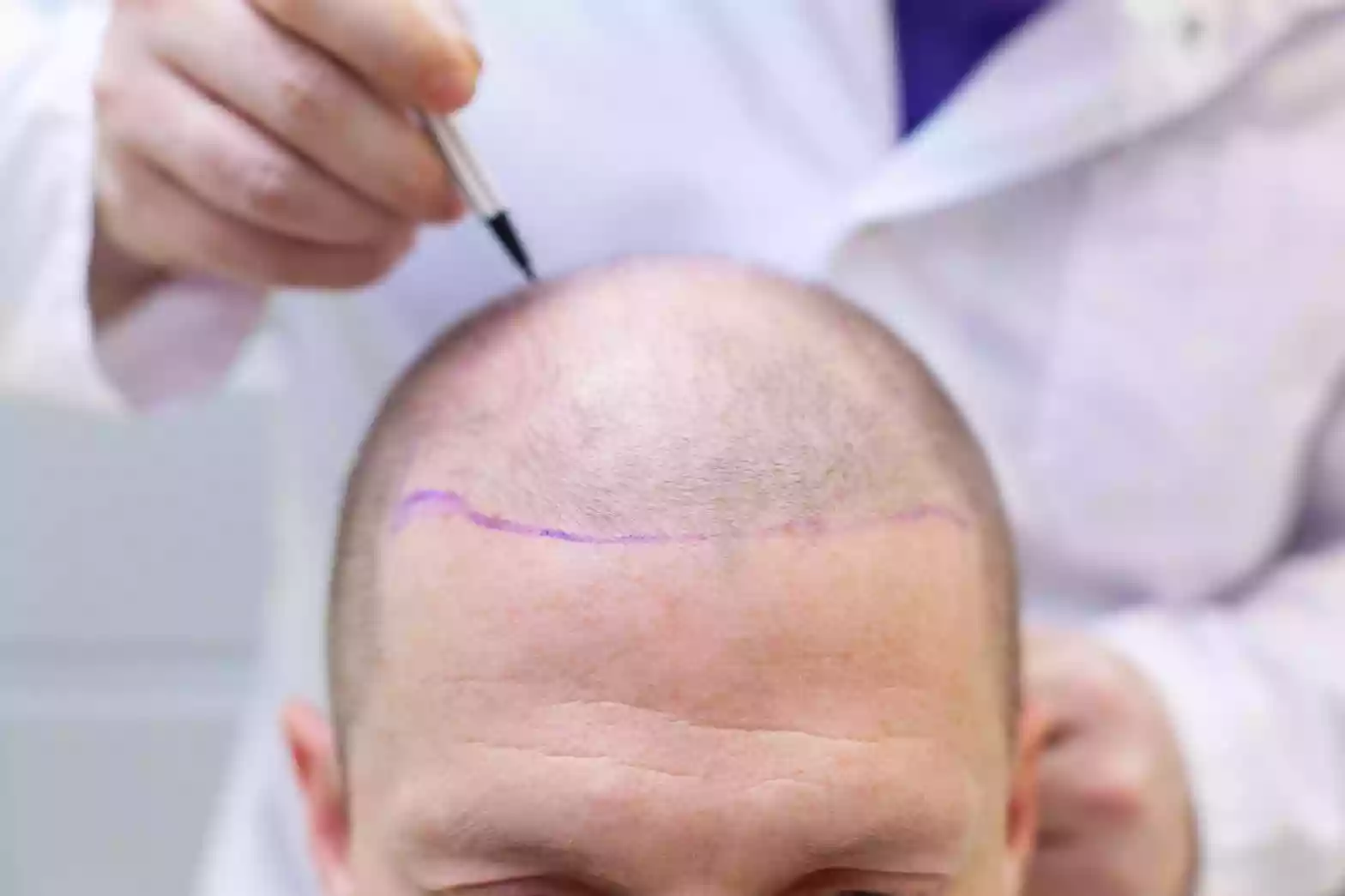
DHI Method Direct Hair Implantation is one of the most refined and technologically advanced hair restoration techniques available in modern aesthetic medicine. Designed to maximize precision, density, and natural-looking outcomes, this method has rapidly gained global popularity among patients seeking minimally invasive yet highly effective solutions for hair loss. Unlike conventional transplant techniques, DHI allows direct implantation of hair follicles without the need to pre-open channels in the recipient area, offering greater control over angle, depth, and direction.
DHI Method Direct Hair Implantation stands out because it combines surgical accuracy with artistic hairline design. Using specialized implanter pens, surgeons can place each graft individually, ensuring a natural distribution that mimics the original growth pattern. The result is not just hair restoration, but a carefully sculpted, aesthetically balanced transformation that enhances facial harmony and long-term confidence.

DHI Method Direct Hair Implantation
What Is DHI Method Direct Hair Implantation?
DHI Method Direct Hair Implantation is an advanced variation of the Follicular Unit Extraction (FUE) technique. In this method, hair follicles are first extracted individually from the donor area, typically located at the back or sides of the scalp. The key difference lies in the implantation stage.
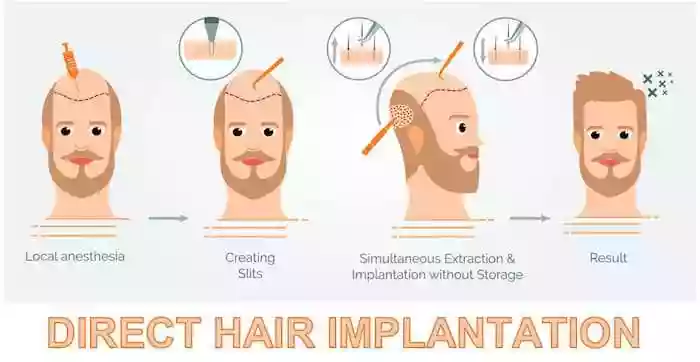
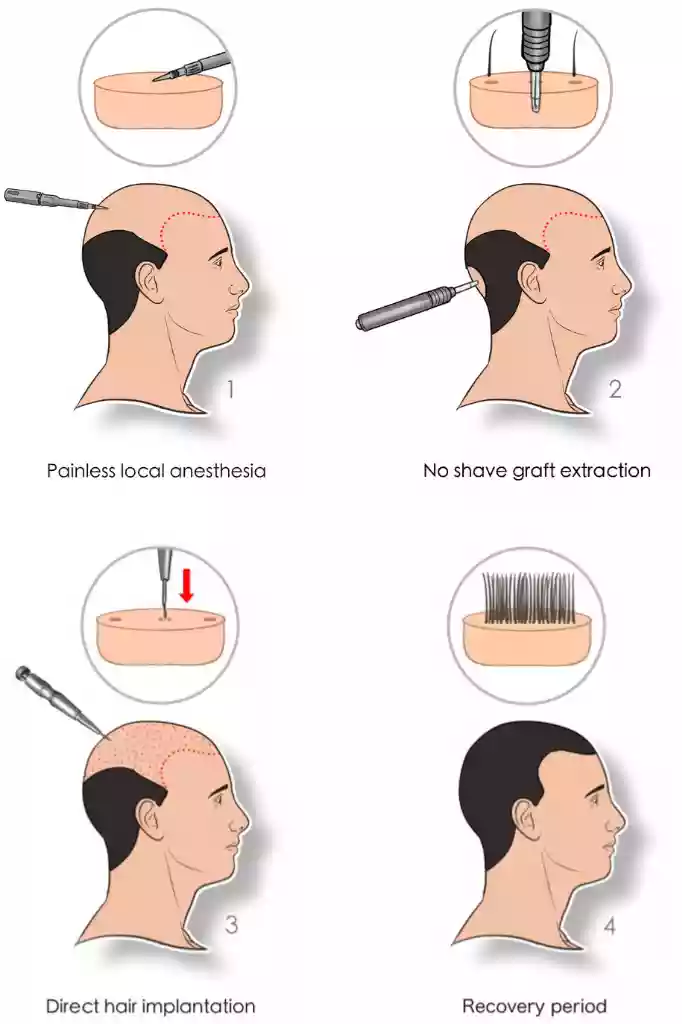
Instead of creating channels beforehand, DHI uses a specialized implanter pen that simultaneously creates a micro-channel and implants the follicle in one single motion. This direct placement technique increases precision and reduces the time grafts spend outside the body.
The Role of the Implanter Pen
The implanter pen is the core innovation behind DHI. It contains a fine hollow needle where the follicular graft is placed. Once positioned at the correct angle, the surgeon gently inserts the graft into the scalp with controlled pressure.
This tool allows:
- Precise depth control
- Natural angle placement
- High-density implantation
- Reduced trauma to surrounding tissue
Step-by-Step Procedure of DHI
The DHI procedure follows a structured clinical process to ensure optimal results.
Consultation and Hairline Design
Every successful DHI procedure begins with a comprehensive consultation. The surgeon evaluates:
- Hair loss pattern
- Donor area density
- Scalp condition
- Age and future hair loss progression
A personalized hairline is then designed to complement facial structure and ensure a natural, age-appropriate appearance.
Donor Area Extraction
Under local anesthesia, follicular units are extracted individually using micro-punch tools. The extraction phase is similar to FUE, ensuring minimal scarring and fast healing.
Graft Preservation
Extracted grafts are carefully stored in special solutions that maintain hydration and vitality until implantation.
Direct Implantation Phase
Unlike traditional FUE, DHI does not require prior channel opening. The surgeon uses the implanter pen to insert grafts directly into the scalp, controlling:
- Angle
- Direction
- Depth
- Spacing
Density Optimization
Because the pen allows controlled placement, surgeons can implant grafts very close to existing hair without damaging surrounding follicles. This makes DHI especially suitable for patients who still have partial hair density.
Advantages of DHI Method Direct Hair Implantation
DHI offers several distinct advantages compared to older techniques.
Increased Precision
The direct implantation system gives the surgeon full control over every graft. This level of precision enhances the natural look of the final result.
Higher Density Potential
Since channels are created during implantation, grafts can be placed closer together, allowing for denser outcomes in suitable candidates.
Reduced Bleeding and Trauma
The micro-incisions made by the implanter pen are extremely small. This reduces tissue trauma and often shortens recovery time.
Faster Recovery
Many patients experience minimal swelling and redness. Most return to daily activities within a few days.
No Linear Scarring
Like FUE, DHI leaves no visible linear scar in the donor area, making it ideal for individuals who prefer short hairstyles.
Who Is an Ideal Candidate for DHI?
Not every hair loss case requires DHI, but it is particularly beneficial for certain profiles.
Early-Stage Hair Loss Patients
Individuals with thinning hair who wish to increase density without shaving the entire scalp may benefit from DHI.
Hairline Restoration Cases
DHI is frequently used for frontal hairline refinement due to its precision and artistic control.
Beard and Eyebrow Transplants
Because of its delicate implantation capability, DHI is often preferred for facial hair restoration procedures.
Recovery Timeline After DHI
Healing after DHI typically follows a predictable pattern.
First Week
Mild redness and small scabs appear around implanted grafts. These naturally shed within 7–10 days.
First Month
Temporary shedding of transplanted hairs, known as shock loss, may occur. This is a normal phase of the hair growth cycle.
Three to Six Months
New hair growth begins gradually. The texture initially appears soft and fine.
Twelve Months
Full results are usually visible at one year, with thicker and more mature hair growth.
Comparison Between DHI and FUE
Although DHI is technically a modification of FUE, there are clear distinctions.
Channel Creation
In FUE, channels are opened first and grafts are inserted afterward. In DHI, both steps occur simultaneously.
Implantation Control
DHI allows more controlled angle and depth placement, which can enhance natural appearance in certain cases.
Procedure Duration
DHI can take slightly longer due to the precision required in implantation.
Cost Consideration
Because of specialized tools and technique complexity, DHI may sometimes be priced higher than standard FUE.
Risks and Considerations
Like any surgical procedure, DHI carries certain risks if not performed correctly.
Importance of Skilled Application
Improper angle placement or over-harvesting can compromise aesthetic outcomes. The experience of the surgical team plays a critical role.
Donor Area Planning
Careful extraction strategy ensures long-term donor area integrity.
Psychological and Lifestyle Impact
Hair plays a central role in self-perception. Hair loss can affect confidence, professional presence, and social interactions.
DHI Method Direct Hair Implantation often provides not only physical restoration but emotional transformation. Many patients report renewed confidence and improved quality of life.
Long-Term Results and Maintenance
Transplanted hair typically retains the genetic characteristics of the donor area, meaning it is resistant to common hormonal hair loss patterns.
However, maintaining overall scalp health through proper nutrition, medical therapies when necessary, and healthy lifestyle habits supports long-term density.
The Future of DHI Method Direct Hair Implantation
Technology continues to refine hair restoration procedures. Improvements in implanter design, graft preservation solutions, and digital hairline planning contribute to even more natural and efficient outcomes.
DHI represents a modern balance between science and artistry. It emphasizes precision, control, and patient comfort, making it one of the most sought-after hair transplant techniques worldwide.
In conclusion, DHI Method Direct Hair Implantation offers a sophisticated, minimally invasive, and highly precise approach to hair restoration. For individuals seeking natural density, refined hairline design, and advanced technology-driven results, DHI stands as one of the leading innovations in contemporary hair transplant surgery.
DHI Method Direct Hair Implantation, is a hair transplant technique in which individual hair follicles are extracted from a donor area and then immediately implanted into the recipient area, without the need for creating incisions or recipient sites.
This method is intended to minimize trauma to the scalp and promote faster healing. The procedure is typically performed using a tool called a DHI implanter pen, which allows the surgeon to create precise, natural-looking hairline. The results of DHI hair transplantation can be very natural-looking, but it requires a great deal of skill and experience on the part of the surgeon to achieve optimal results.
DHI hair transplantation is considered a relatively new technique and is considered to be more advanced than traditional FUE (Follicular Unit Extraction) hair transplantation. The DHI method allows for greater precision in the placement of individual hair follicles, resulting in a more natural-looking hairline and density. Additionally, DHI is less invasive, with minimal scarring, pain, and post-operative recovery time.
The DHI method is generally recommended for those who want to address hair loss or thinning in specific areas, such as the hairline, temples, or crown. It’s also suitable for people who want to increase the density of their existing hair.
The procedure is typically performed under local anesthesia and can take several hours to complete, depending on the size of the area being treated. The transplanted hair typically begins to grow within 3-4 months, and the final result can be seen within 6-9 months.
It’s important to note that DHI Method (Direct Hair Implanttation) hair transplantation is not suitable for everyone and it’s important to consult with a qualified and experienced hair transplant surgeon to determine if this method is right for you. They will assess your medical history, scalp condition, and hair type, and recommend the best course of treatment for achieving your desired results.
Another advantage of DHI hair transplantation is that it allows for greater control over the direction and angle of hair growth, resulting in a more natural-looking final outcome. This is because the surgeon can use the DHI Method (Direct Hair Implanttation) implanter pen to precisely control the angle and direction of hair growth when implanting the individual hair follicles. DHI Method, Direct Hair Implantation
Additionally, DHI hair transplantation is considered to be more time-efficient than traditional hair transplant Antalya methods. The DHI method eliminates the need for creating recipient sites and allows for a faster procedure time.
It’s important to keep in mind that like any surgical procedure, there are some risks associated with DHI hair transplantation. These may include infection, bleeding, and scarring. However, these risks can be minimized by choosing a qualified and experienced hair transplant surgeon.
It’s also important to remember that DHI hair transplantation is not a permanent solution to hair loss. The transplanted hair will fall out within a few weeks, but then it will grow back naturally. And like any surgical procedure, it’s important to have realistic expectations of the results, while understanding that no hair transplant can guarantee 100% success.
In conclusion, DHI hair transplantation is a newer and advanced technique that can provide natural-looking results, with minimal pain, scarring, and recovery time. It’s essential to consult with a qualified and experienced hair transplant surgeon to determine if this method is right for you and to have realistic expectations about the results.
DHI Method Direct Hair Implantation Bodrum
What is DHI?
More than 85 percent of men have thinning hair by age 50. More than 50 percent of women will also experience a noticeable amount of hair loss in their lifetime.
Several types of hair transplant surgeries have been developed to help regrow lost hair. Follicular unit transplantation (FUT) and follicular unit extraction (FUE) are the two most common techniques.
During FUT, a surgeon cuts a strip of hair from the back of your scalp and extracts individual hair follicles. During FUE, a surgeon removes follicles directly from your scalp. In both surgeries, the follicles are implanted into balding parts of your scalp.
Direct hair implantation (DHI) is a modification of the FUE technique created by the company DHI Global Medical Group.
In FUE, a surgeon manually cuts channels in your scalp before implanting hair follicles. During DHI, they use a specialized pen-shaped tool that can do both at the same time.
Let’s break down everything you need to know about DHI surgery. We’ll also compare it to FUT and FUE to help you decide which may be best for you.
How direct hair implantation works
DHI is a modified version of FUE hair implantation and follows a similar procedure. Your surgeon will remove hair follicles from a part of your scalp, usually the back of your head, and implant them into balding areas. These hair follicles will eventually grow new hairs.
Here’s what you can generally expect during the procedure:
- Your surgeon will shave your head and apply local anesthesia to numb it.
- The surgeon will extract hair follicles from the back of your head using a tool with a fine tip.
- The hair follicles will be loaded into a pen-shaped tool and implanted into the balding part of your scalp.
- The surgeon will apply an antibiotic cream and apply a bandage to all sites.
FUE and DHI surgeries generally take about 8 hours to complete, but the exact time can vary depending on the number of hair follicles being transplanted. It can take 12 to 18 months to see the full results of the surgery.
Who needs a DHI procedure?
People with androgenic alopecia, which is the most common type of hair loss, make the best candidates for hair implantations. This condition is commonly referred to as male or female pattern hair loss.
The following characteristics also make you a good candidate for hair transplantation:
- Age. People who get hair implants should be over age 25. Hair loss before this age is more unpredictable.
- Hair diameter. People with thicker hair usually achieve better results than people with thinner hair. Thicker hair gives each hair follicle more coverage.
- Donor hair density. Patients with a hair density of fewer than 40 folliclesTrusted Source per square centimeter at their donor site are considered poor candidates for hair transplants.
- Hair color. People with light hair or with a hair color close to their skin tone often achieve the best results.
- Expectations. People with realistic expectations are most likely to be satisfied with their results.
DHI vs. FUE and FUT hair transplant
DHI, FUE, and FUT all involve taking follicles from one part of your scalp and implanting them into balding areas.
During FUT surgery, a surgeon cuts a long and narrow strip of skin from the back of your scalp. Individual hair follicles are removed and implanted along your hairline. This method is usually the quickest and cheapest, but it can leave a long scar. The scar may be noticeable if you wear your hair short, but longer hair usually hides it.
In DHI and FUE surgeries, individual hair follicles are removed directly from your scalp. During FUE, a surgeon manually cuts a series of canals in your scalp to insert the hair follicles. The DHI technique allows surgeons to make these incisions and implant hair at the same time.
DHI and FUE avoid the long scar caused by FUT, however, these surgeries generally take longer and are more expensive.
Companies that offer DHI claim that it’s the most advanced and effective hair treatment option. However, there haven’t been any studies comparing the results to other hair treatment techniques.
All types of FUE surgery can be successful in treating hair loss. However, there’s some debateTrusted Source about whether FUT or FUE is the more effective method.
DHI hair transplant side effects and precautions
Hair transplantation surgeries are relatively safe and rarely cause complications. DHI and FUE are less invasive than FUT because they don’t require a surgeon to cut a large strip of skin.
Many companies claim that FUE techniques are scarless, however, they still do cause a series of tiny scars from the removal of individual follicles. These scars are usually not noticeable.
Here are a few potential complications of DHI surgery.
Negative reaction to anesthesia
During DHI, local anesthesia will be applied to your scalp to numb it. Anesthesia is generally safe, but it may cause negative reactions in some people.
The overwhelming majority of reactions are related to fear or anxiety and not a topical sensitivity to the anesthesia. DHI Method, Direct Hair Implantation
Infection
It’s possible to develop an infection either at the donor site or at the area where hair follicles are implanted. Serious infections are rare and occur in less than 1 percentTrusted Source of hair implantation surgeries. DHI Method, Direct Hair Implantation
Shock hair loss
Shock hair loss can occur within 2 months of surgery. It refers to a temporary hair loss at the site of the hair transplant. A full recovery is almost always made in 3 to 4 months.
Undesired appearance
When the hair follicles are grafted, they should be aligned in a way that mimics your natural hair growth. If the follicles are implanted poorly, it can lead to an appearance you’re unsatisfied with. DHI Method, Direct Hair Implantation
To give you the best chance of achieving pleasing results, it’s a good idea to research surgeons in your area before you have the surgery. Check before-and-after results of previous clients and get in touch with other clients of that surgeon to help you make a decision.
Other complications
Other potential complications of hair transplant surgeries include:
- bleeding
- dizziness
- pain
- increased heart rate
- inflammation of hair follicles
- sparse appearance around donor site
- scarring
DHI hair transplant cost
DHI Global estimates the price of a DHI session at clinics in London, Athens, Dubai, or Paris between $3,250 and $13,500.
The cost of a hair transplant varies considerably based on the city the surgery is performed in, the clinic you visit, and the total amount of hair that’s implanted. Most insurance companies are unlikely to cover the cost of DHI since it’s considered a cosmetic surgery.
To reduce the cost, you may want to consider traveling to a cheaper geographic location or reducing the number of hair follicles you get transplanted. DHI Method, Direct Hair Implantation
Some alternatives to hair transplant include:
- minoxidil (Rogaine)
- finasteride (Propecia)
- low-level laser therapy
Takeaway
DHI is a modified version of FUE hair implantation. There’s no research available on the effectiveness of DHI specifically, but all types of FUE surgery have the potential to treat hair loss caused by male or female pattern baldness.
Hair implantation surgeries are relatively expensive. If you can’t afford surgery or don’t have access to it, you can try alternatives such as Rogaine or finasteride tablets. DHI Method, Direct Hair Implantation
Does Hair Transplant Work? Effectiveness, Side Effects, and Photos (healthline.com)

