Lip, Nose and Face Fillers in BodrumTypes of filler, treatment steps, recovery, how long they last, risks and choosing a clinic in Bodrum and Marmaris
Lip filler, nose and face fillers in Bodrum and Marmaris: treatment steps, how long they last, side effects, recovery and what to ask when choosing a clinic.
Lip filler is a non-surgical medical aesthetic procedure that adds volume, definition and symmetry to the lips, usually by injecting a hyaluronic acid filler. The same method can be used as nose and face filler on the cheekbones, nasolabial folds, tear troughs and jawline. It is often researched by both residents and holidaymakers in Bodrum, Marmaris and Fethiye.
In this guide we explain how lip filler is done, the recovery, how long it lasts, nose and face filler options, possible side effects and who should not have it. We have also gathered what to look for in a clinic before having fillers in Bodrum and Marmaris. The information is general; your doctor decides which treatment suits you after an examination.
- Treatment time
- Usually 15–30 minutes for the lips
- How long it lasts
- Usually 6–12 months in the lips with hyaluronic acid
- Who can do it?
- Only a doctor, in a licensed health facility
- Back to daily life
- Quickly for most people; swelling eases in a few days
- 💋 Lip fillers
- 👃 Nose filler
- ✨ Face fillers
- 📍 Bodrum and Marmaris
 1 / 7
What are dermal fillers? What is used in lip fillers?
Filler aesthetics is a non-surgical medical aesthetic treatment that uses injectable fillers under the skin to restore lost volume, soften wrinkles and define facial contours. Lip filler is the best known of these; nose and face fillers follow the same logic, in different areas and often with products of different density.
Fillers fall into temporary and permanent types. The most widely used group today is temporary fillers made from hyaluronic acid, a sugar molecule also found naturally in the body. The US Food and Drug Administration (FDA) publishes the approved uses, risks and patient information for fillers in detail on its dermal fillers page.
| Filler | How it works | Common use | Approximate duration |
|---|---|---|---|
| Hyaluronic acid | Adds volume by holding water; can be dissolved if needed. | Lip filler, nose, tear trough, nasolabial folds | 6–18 months depending on product and area |
| Calcium hydroxylapatite | Denser; used for deep volume loss. | Cheekbones, jawline | Usually 12–18 months |
| Poly-L-lactic acid | Stimulates the skin’s own collagen production; the effect appears slowly. | Large volume loss in the cheeks and temples | Up to 1–2 years |
| Permanent fillers (PMMA etc.) | Stays in the body permanently; hard to remove. | Rarely chosen today | Permanent |
The durations in the table are general ranges; different brands and densities of the same substance are absorbed at different rates. Hyaluronic acid is almost always chosen for lip filler because it suits soft tissue well and can be dissolved if the result is unwanted.
Which areas can be filled, and how is the amount decided?
Filler is most often used on the face. There is no standard measure of how much filler goes where; the doctor plans the amount in millilitres (ml) after assessing your facial structure, skin and expectations.
- Lip filler: To add lip volume, define the lip line and correct left-right symmetry.
- Nose filler: To camouflage small bumps on the bridge of the nose, slightly lift the tip and balance the profile.
- Cheekbones: To restore cheek volume lost with age and add freshness to the face.
- Nasolabial folds: To soften the deep lines running from the side of the nose to the corners of the mouth.
- Tear trough: To reduce hollowness and a tired look under the eyes.
- Chin and jawline: To balance a receding chin and define the face’s oval.
For expression lines such as the forehead and frown area, botox is usually the first choice; filler is used for static lines that form independently of facial muscles or for volume loss. For more on botox, see our Bodrum botox guide.
How is lip filler done? Step by step
Lip filler is a short procedure done by a doctor in a private practice, polyclinic or hospital. The process generally has these steps:
- Assessment and planning: The doctor assesses your lip structure, facial proportions and expectations. Together you plan which parts of the lips (body, border, corners, Cupid’s bow) will be treated and how much filler will be used. The product name, amount and possible risks should be discussed at this stage.
- Numbing: For comfort, a numbing cream or local anaesthetic is applied to the lips. Many hyaluronic acid products also contain an anaesthetic such as lidocaine, which reduces discomfort during the procedure.
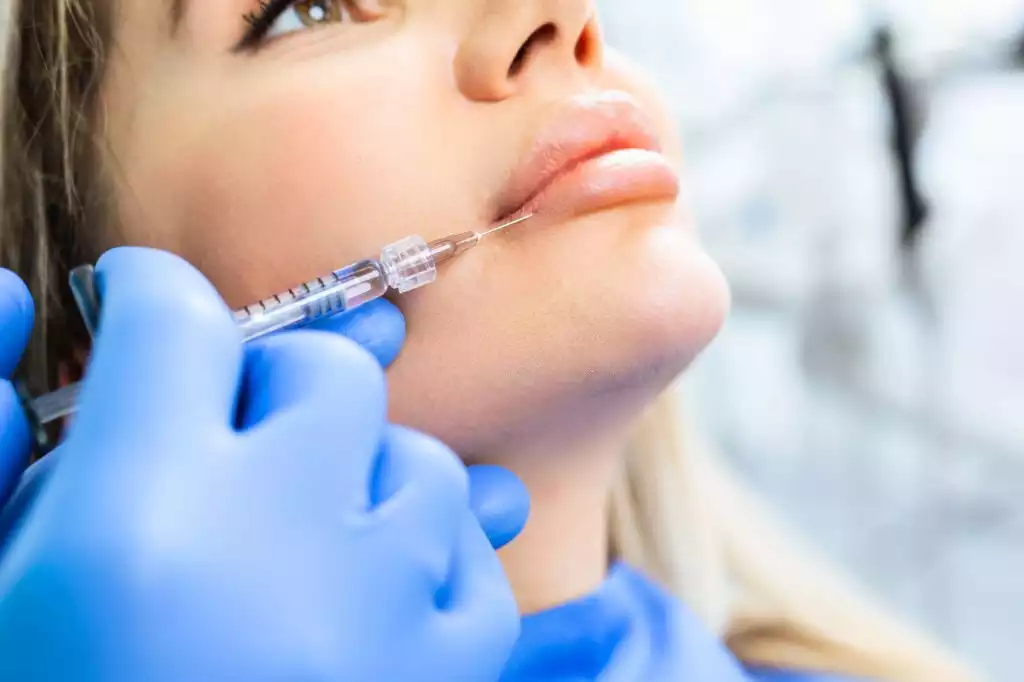
- Filler injection: Hyaluronic acid filler is injected in small amounts at the planned points with a fine needle or cannula. During lip filler, the natural shape of the lips and their harmony with the face are taken into account and excessive volume is avoided.
- Shaping and check: After the injection the doctor gently shapes the lips so the filler spreads evenly and checks symmetry. Small adjustments are made in the same session if needed and a follow-up is planned.
Lip filler usually takes 15–30 minutes. The FDA has announced that needle-free injection devices (such as hyaluron pens) are not approved for lip and face fillers and should not be used; think of lip filler only as a procedure a doctor performs with a needle or cannula.
What to watch for when having lip fillers
- Practitioner: Confirm that the person doing the procedure is a doctor and that it is done in a licensed health facility.
- Product: Ask the brand, contents and amount of the filler; if possible, see the box and label.
- Expectations: Explain clearly what you want; a doctor who sets realistic limits and says “less” is a good sign.
- Medicines: Mention blood thinners, supplements and allergies in advance; do not stop a medicine on your own, ask your doctor.
- Cold sore history: Say if you get cold sores often; lip filler is postponed while a cold sore is active.
- Follow-up: Ask whether a follow-up session and any touch-up are included in the fee.
Preparing for lip fillers
Although lip filler is a short procedure, simple preparations a few days ahead can reduce the risk of bruising and help recovery. The following are general suggestions; your doctor gives you specific instructions.
A week before
Tell your doctor about all medicines and supplements you take. Aspirin, some painkillers, fish oil, vitamin E and supplements such as ginkgo can increase bruising; your doctor will tell you which to pause. Do not stop prescribed blood thinners on your own.
A day or two before
Cut down on alcohol and drink plenty of water. If you get cold sores often, say so in advance; the doctor may suggest preventive treatment. If you have an important event, wedding or photo shoot, plan lip filler at least two weeks before.
On the day
Go without lip make-up. Tell the doctor you would like to see the name, amount and box of the product; read the consent form before signing. Ask whether it is fine to drive afterwards.
Lip filler techniques: natural volume, contour and Russian lips
Lip filler is not one-size-fits-all. The same amount of filler can give very different results when placed at different points and depths. So at the first consultation, discuss “what kind of look” before “how much”.
Natural volume
Small amounts of filler are placed in the body of the lip to keep its shape and simply add volume. For first-timers, starting with a small amount and adding at the follow-up if needed is usually recommended.
Contour (lip line)
The lip border is defined, sharpening thin or faded lip edges. For the fine “barcode” lines that form around the mouth with age, contour support and fine filler can be combined.
Russian lip technique
Filler is concentrated in the centre of the lip with vertical injections; the aim is a heart-shaped look by lifting the lip upwards rather than pushing it forward. It does not suit every lip; for thin lip tissue the doctor may suggest another method.
Lip corners and symmetry
Supporting downturned lip corners gives the face a more rested expression. Differences between the left and right lips can also be balanced with small amounts.
Lip filler, botox lip flip and lip lift: the differences
| Method | What it does | Who it suits |
|---|---|---|
| Lip fillers | Adds volume, definition and symmetry to the lips. | Thin lips or lips that have lost volume |
| Botox lip flip | Relaxes the muscle around the mouth so the upper lip turns slightly outwards; adds no volume. | People whose upper lip disappears when they smile; shorter-lasting than filler |
| Lip lift | Surgically shortens the distance between nose and lip; permanent. | People with a long gap between nose and lip; requires surgery |
The doctor decides which method suits you after a facial analysis; sometimes lip filler and botox are planned together.
Lip filler recovery and aftercare
Lip filler results are usually visible straight away, but swelling in the first days can make lips look fuller than planned. It can take a few weeks for the filler to settle fully and the lips to take their final shape.
First 1–3 days
There may be swelling, redness, tenderness and mild bruising at injection points. Cold compresses at intervals, as your doctor advises, can ease swelling. Avoid pressing or massaging the lips.
First week
Swelling goes down noticeably. During this time, avoiding intense exercise, sauna, hammam and extreme heat is recommended. Alcohol and smoking can slow healing.
2–4 weeks
The filler settles and the lips feel softer and look more natural. The result is assessed at the follow-up; a small top-up can be done if needed.
Lip filler aftercare tips
- Doctor’s instructions: Follow the aftercare advice you were given; use a suitable lip moisturiser and sunscreen.
- Make-up: Avoid lip make-up on the first day, and be gentle afterwards.
- Sun and sea: If you have treatment in Bodrum in summer, avoid strong sun, sauna and hammam for the first days.
- Dental treatment and vaccines: Tell your doctor about any dental treatment planned just before or after the procedure.
- Follow-ups: Do not skip the follow-up; if asymmetry or swelling does not settle, go back early.
Whitening of the skin, purplish or lace-like discolouration, worsening pain, vision problems or signs of stroke are emergencies. Contact the doctor who treated you immediately or call 112.
How long do lip fillers last?
The hyaluronic acid used in lip fillers is gradually absorbed by the body; because the lips move a lot, the effect usually lasts 6–12 months. It may last longer for some people and less for others. The main factors are:
- Product: Its brand, density and degree of cross-linking.
- Amount and technique: The amount of filler and the injection depth.
- Personal factors: Metabolic rate, age, skin type, smoking and lifestyle.
Since the effect fades gradually, repeat treatments can be planned at intervals for those who want to maintain their lip filler. Your doctor decides the timing and amount after assessing what remains from the previous treatment.
Can lip filler be dissolved?
Hyaluronic acid lip filler can be dissolved with an enzyme called hyaluronidase if you dislike the result, the filler migrates or there is a complication. Dissolving is also a medical procedure; an allergy test may be needed and only a doctor should do it. If lip filler is to be redone after dissolving, doctors usually recommend waiting a while for the tissue to recover. Removing permanent or non-hyaluronic acid fillers can be difficult or impossible.
Fillers for men
Fillers are not just for women; chin and jawline filler, tear trough and nasolabial treatments are also common in men. Since the aim in men is usually more angular, defined contours, product choice and injection points are planned differently. Lip filler is less popular among men but can be used for slight volume in thin lips.
How is nose filler done, and how long does it last?
Nose filler is also known as a “non-surgical nose job”. Hyaluronic acid filler is usually used to camouflage small bumps on the bridge, slightly lift the tip and balance the profile. It does not make the nose smaller or fix breathing or structural problems; for those expectations, surgical options should be discussed.
Procedure
After the examination the area is numbed, and tiny amounts of filler are placed at set points of the nose with a fine needle or cannula and shaped. The result is usually visible straight away; it may take a few weeks to settle fully.
How long it lasts
Nose filler usually lasts 6–18 months. This depends on the product, amount and the person’s metabolism; repeat treatment is needed to keep the look.
Why it needs extra care
According to the FDA’s review of medical literature and adverse event reports, reports of blocked blood vessels most often involve the area between the brows, the nose and around it, the forehead and around the eyes. It is important to have nose filler done by a doctor experienced in this area and to ask about their plan for dealing with complications.
Who is nose filler suitable for, and who not?
- May be suitable: People with a small bump or dip on the bridge, a slightly drooping tip, or who want to camouflage small irregularities after surgery (with the surgeon’s approval).
- Not suitable: People who want a smaller or narrower nose, those with a marked deviation or breathing problems, and those with thick, oily nasal skin where filler may show.
- After previous surgery: Since blood vessel structure may have changed after nose surgery, nose filler needs extra care; consulting the surgeon who operated is recommended.
After nose filler you may be advised not to wear glasses, squeeze your nose or sleep face down for the first days; these vary by product and technique, so follow your doctor’s instructions.
Face fillers: cheekbones, nasolabial folds, tear troughs and chin
Face filler is used in different areas to restore volume lost with age and balance facial contours. Each area needs products of different density and a different technique.
Nasolabial fold filler
Volume loss beneath the lines running from the side of the nose to the corners of the mouth is supported with filler to soften them. The aim is a more rested look without changing your expression. Mild swelling and redness pass within a few days.
Cheekbone filler
A denser filler is usually placed over the cheekbones to add volume to the mid-face. Supporting the cheekbones can also indirectly soften nasolabial folds.
Tear trough filler
A fine, soft hyaluronic acid filler is placed in the hollow under the eyes. Since the eye area is delicate in terms of blood vessels, it is especially important that an experienced doctor does it.
Chin and jawline filler
Chin filler adds volume to the tip of the chin to balance a receding chin; jawline filler defines the line from chin to ear and sharpens the face’s oval. They can be planned together; which suits you is decided after a facial analysis.
What is a liquid facelift?
A liquid facelift is an overall rejuvenation plan without surgery, using filler, and often botox, in several areas of the face in one session or at short intervals. Cheekbones, temples, nasolabial folds and jawline are treated together. It does not replace a surgical facelift; its effect is limited where sagging is marked. As cost and risk rise with the total amount of product, the plan may be split into stages.
The difference between filler and botox
Botox temporarily relaxes muscles to reduce expression lines (forehead, frown lines, crow’s feet); it adds no volume. Filler adds volume under the skin to fill hollows and static lines. In some areas, such as between the brows, both may be used; the doctor plans the order and interval of face filler and botox.
Can fillers be used on the body? Are there permanent fillers?
It is often said that filler can also be used on the hands, décolletage, arms and buttocks; however, the FDA has not approved fillers for breast or buttock augmentation. It has warned that unapproved products such as injectable silicone can cause long-term pain, infection, permanent disfigurement, blocked blood vessels and death. Although approved products exist for some areas such as the back of the hand, a specialist doctor must decide whether body treatments are suitable.
Permanent fillers
- What are they? Synthetic substances such as polymethyl methacrylate (PMMA) stay in the body permanently.
- Why are they not preferred? They are hard or impossible to remove if the result is unwanted; problems such as granulomas (tissue reactions), infection and deformity can appear even years later.
- Out of step with ageing: While the face changes over time, permanent filler stays the same; in later years it can lead to an unnatural look.
- The advantage of temporary filler: Hyaluronic acid fillers are absorbed over time and can be dissolved with hyaluronidase if needed.
Side effects of lip and face fillers
As with any medical procedure, fillers carry risks. Common side effects are mostly mild and temporary; serious complications are rare but need fast treatment when they happen.
Common and temporary
Bruising, redness, swelling, pain and itching. These usually ease on their own within a few days.
Less common
Small lumps or nodules under the skin, discolouration, infection, allergic reaction, asymmetry and filler migration. Most can be treated; hyaluronic acid fillers can be dissolved.
Rare but serious
According to the FDA, the most serious risk with fillers is accidental injection into a blood vessel, which can cause tissue death (necrosis), vision loss or stroke. So the doctor must know facial anatomy well and be prepared to manage complications.
If you notice unusual pain, whitening of the skin, blurred vision or signs of stroke during or after the procedure, contact the doctor immediately or call 112.
Who should not have fillers?
Lip, nose and face fillers may not suit everyone. In the following situations treatment is usually not done or is postponed; your doctor makes the final decision after an examination.
- Pregnancy and breastfeeding: Fillers are generally not recommended during this time.
- Active infection: If there is a cold sore, spot, inflammation or skin disease in the area, treatment is postponed.
- History of allergy: People with a known allergy to filler ingredients or local anaesthetics, or a history of serious allergic reactions.
- Some autoimmune diseases: Risk may be higher with immune system diseases; discuss this in detail with your doctor.
- Bleeding risk: Bruising and bleeding risk is higher in people on blood thinners; do not stop your medicine without your doctor’s approval.
- Under 18: Filler products are generally approved for adults; cosmetic filler is not recommended for minors.
Filler myths
“Your face sags when you stop fillers”
When hyaluronic acid filler is absorbed, the face returns to the natural ageing line it would have had; the filler itself does not cause sagging. However, excessive and frequent treatments over years can stretch tissue, so moderate amounts matter.
“The more, the better”
Too much filler can lead to an unnatural look, filler spilling over the lip border and migration. A good result is usually one where nobody can tell you have had filler.
“Filler is permanent”
Most lip and face fillers used today are temporary. If you are offered a product said to be permanent, always ask what it contains; permanent fillers can be hard or impossible to remove.
“Cheap filler is the same filler”
The product’s brand, authenticity and storage directly affect the result and safety. Offers far below market price and products sold online may be fake or contaminated; you have the right to see the box and batch number.
“Filler is done the same way for everyone”
Even filler in the same area is planned differently according to a person’s bone structure, skin thickness and facial proportions. Showing someone else’s photo can give an idea, but expecting an identical result is not realistic.
Having fillers on holiday in Bodrum
Bodrum, Marmaris and Fethiye welcome many visitors from Turkey and abroad in summer, and some choose to have lip or face fillers during their holiday. If you are combining treatment with your holiday, keep these points in mind:
- Timing: Plan the procedure for the first days of your holiday so you can attend a follow-up before you leave; do not leave it until just before your flight.
- Sun and sea: In the first days, strong sun, the sea, pools, hammams and saunas can increase swelling; plan your beach days accordingly.
- Communication: If you will be treated in a foreign language, ask for the consent form in a language you understand and whether interpreter support is available.
- Paperwork: Ask for a document with the product name, batch number, amount and treatment date; your next doctor at home will need it.
- Insurance: Remember that travel health insurance usually does not cover aesthetic procedures or their complications.
For accommodation and holiday planning in Bodrum, see our Bodrum holiday guide, and for health services our Bodrum health guides.
Lip fillers in Bodrum and Marmaris: choosing a clinic and booking
In Turkey, injectable procedures such as botox and fillers cannot be done in beauty salons or beauty centres. They may only be performed by doctors in Ministry of Health licensed facilities such as private practices, polyclinics, medical centres and hospitals. The Ministry of Health once filed a criminal complaint against a hairdresser who did lip fillers; in Bodrum you may also come across “filler at home” offers on social media in summer, so stay away from them.
What to look for in a clinic
Ask about the facility’s licence and the name and specialty of the doctor who will treat you. Expect the product’s brand, batch number and amount in writing and a consent form to sign before treatment. Find out whom and which number to contact in case of a complication.
Health facilities in Bodrum
Bodrum has private hospitals, medical centres and practices of medical aesthetic doctors. From our guides, see Clinic Bodrum, Acibadem Bodrum Hospital and facial aesthetics in Bodrum.
Marmaris and Fethiye
Marmaris has medical aesthetic doctors and clinics for lip and face fillers; our Marmaris botox guide has more details. Visitors from Fethiye should plan whether they can come back for a follow-up before booking.
Booking and getting there
Clinics in Bodrum are mostly around the centre, Konacik and Gumbet. If you are coming from other districts of Mugla, ask in advance about appointment times, parking and whether it is fine to drive after the procedure.
What to clarify when asking about lip filler prices
Lip filler prices in Bodrum vary with the product brand, amount, treatment area and doctor. Since no reliable, up-to-date price list is published, we do not give figures. When getting a price, ask:
- Product: Will the brand and box of the filler be shown?
- Amount: How many ml does the price cover, and what does extra cost?
- Follow-up: Is the follow-up and small touch-up 2–4 weeks later included?
- Complications: How does it work if dissolving or emergency treatment is needed?
A short history of fillers
Injecting substances to add volume to the face is not a new idea, but filler aesthetics as we know it became widespread in the 1980s with bovine collagen fillers. Collagen fillers needed an allergy test and did not last long. With the approval of hyaluronic acid fillers in the early 2000s, lip and face fillers became far more common; in the US the first hyaluronic acid filler received FDA approval in 2003. In later years, products of different densities, cannula techniques and ultrasound-guided injection extended treatment to areas such as the nose, tear troughs and jawline.
In Turkey, botox and filler treatments have long been restricted to doctors and health facilities. The rules on which doctors can perform medical aesthetic treatments have changed several times in recent years, but the rule that injections cannot be done in beauty salons has not.
Lip fillers: pros and things to watch
Pros
- Non-surgical: A short procedure, usually done under local numbing.
- Quick results: The effect is usually visible straight away; most people return to daily life quickly.
- Reversible: Hyaluronic acid lip filler can be dissolved if needed.
- Tailored: Amount and area can be adjusted to the person’s face.
Things to watch
- Temporary: Regular repeats are needed to keep the result.
- Practitioner: Treatments by non-doctors can lead to serious complications.
- Overdoing it: Too much filler can cause an unnatural look and filler migration.
- Products bought online: Filler products sold online may be fake or contaminated; never inject yourself.
Health facilities in Bodrum: ratings and reviews
The ratings below are overall Google Maps averages, not specific to lip filler; they are not a ranking or recommendation.
What patients love: Doctors who listen to expectations and do not recommend more than needed, being shown the product box and label, natural-looking results, interpreter support for foreign patients and clean clinics.
What patients criticise: A feeling that some facilities charge tourists more, long waits for patients with appointments, and lack of attention when problems arise after treatment.
Lip, nose and face fillers FAQ
What is lip filler?
Lip filler is a non-surgical medical aesthetic procedure that adds volume, definition and symmetry to the lips, usually by injecting a hyaluronic acid filler.
How long does lip filler take?
The treatment itself usually takes 15–30 minutes; extra time may be needed for the assessment and numbing cream beforehand.
Is lip filler permanent?
No. The most common hyaluronic acid fillers are absorbed by the body over time; in the lips the effect usually lasts 6–12 months. This varies with the product, amount and person.
Does lip filler hurt?
Numbing cream or local anaesthetic is used beforehand, and many products contain an anaesthetic. Most people describe it as mild discomfort; pain thresholds vary.
When will I be back to normal after lip filler?
Swelling, redness and mild bruising usually ease within a few days; most people return to daily life quickly. The filler can take a few weeks to settle fully.
Can nose filler replace surgery?
Nose filler can camouflage small bumps and asymmetries on the bridge but does not make the nose smaller or fix structural problems. Because of its blood vessels, the nose is one of the riskier areas for filler; it should be assessed by an experienced doctor.
Which areas can face filler be used on?
Cheekbones, nasolabial folds, tear troughs, the chin and the jawline are the most commonly treated areas. The doctor decides how much filler each area needs after an examination.
Can filler be dissolved?
Hyaluronic acid fillers can be dissolved by a doctor with an enzyme called hyaluronidase. Removing permanent or non-hyaluronic acid fillers can be difficult or impossible.
Can I have lip filler at a beauty salon?
No. In Turkey, injectable procedures such as fillers cannot be done in beauty salons or beauty centres; they may only be done by doctors in licensed health facilities such as private practices, polyclinics, medical centres and hospitals.
Which symptoms after filler mean I should see a doctor?
Worsening pain, whitening or purplish discolouration of the skin, vision problems or signs of stroke are emergencies; contact the doctor who treated you or call 112 without delay.
How much does lip filler cost in Bodrum?
The price depends on the product brand, amount (ml), treatment area and doctor. Since no reliable, up-to-date price list is published, we do not give figures; get a price by asking about the product name, amount and follow-up session.
How can I add my clinic to this guide?
If you are a licensed health facility offering fillers in Bodrum, Marmaris or Fethiye, contact us through bodrumlu.com; we add you to our guides after verifying your details.
The information on this page is for general purposes only; it does not replace diagnosis, treatment advice or medical advice and promises no particular result. Your doctor decides after an examination whether lip, nose or face filler suits you, and which product and amount to use. Ratings on this page come from public Google Maps reviews; they are not a recommendation or ranking. Price, hours and service details may change; check before booking.
In an emergency call 112; if you have an unexpected problem after a procedure, see your doctor without delay.